
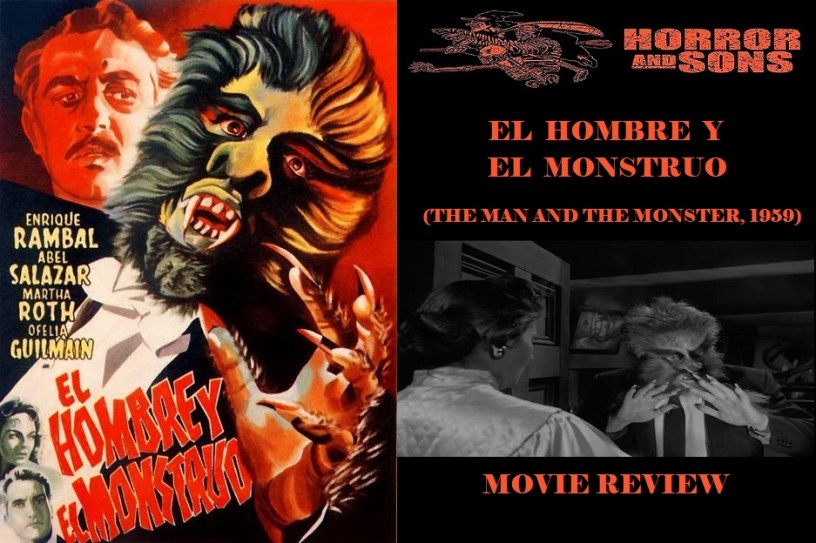
El Hombre y El Monstruo is a 1959 Mexican horror film written by Alfredo Salazar, who also wrote the scripts for the Aztec Mummy and Santos films, and was directed by Rafael Baeldón, who also lensed 1960’s The Hell of Frankenstein and 1963’s The Curse of the Crying Woman (aka La maldición de la Llorona). El Hombre y El Monstruo was produced by Abel Salazar, the director’s brother. Abel Salazar also starred in The Curse of the Crying Woman, as well as what is one of my personal favorite Mexican horror films of the era, 1962’s The Brainiac.
Late one evening, a young woman recklessly swerves her car into a tree while driving on a quiet road near a small countryside village. Despite smashing up the vehicle’s front end and shattering the windshield, the woman escapes from the car without so much as a scratch. Seeking assistance, she approaches a nearby villa, hearing the sounds of someone playing the piano. Upon her knocking on the door, the resident informs the woman that she must unlock the door from the outside and that the key is somewhere on the ground near her. As none of these seems even remotely bizarre to the woman, she locates the key and unlocks the door. What she discovers on the other side leaves her screaming in terror as the film’s title credits splash across her zoomed-in face.
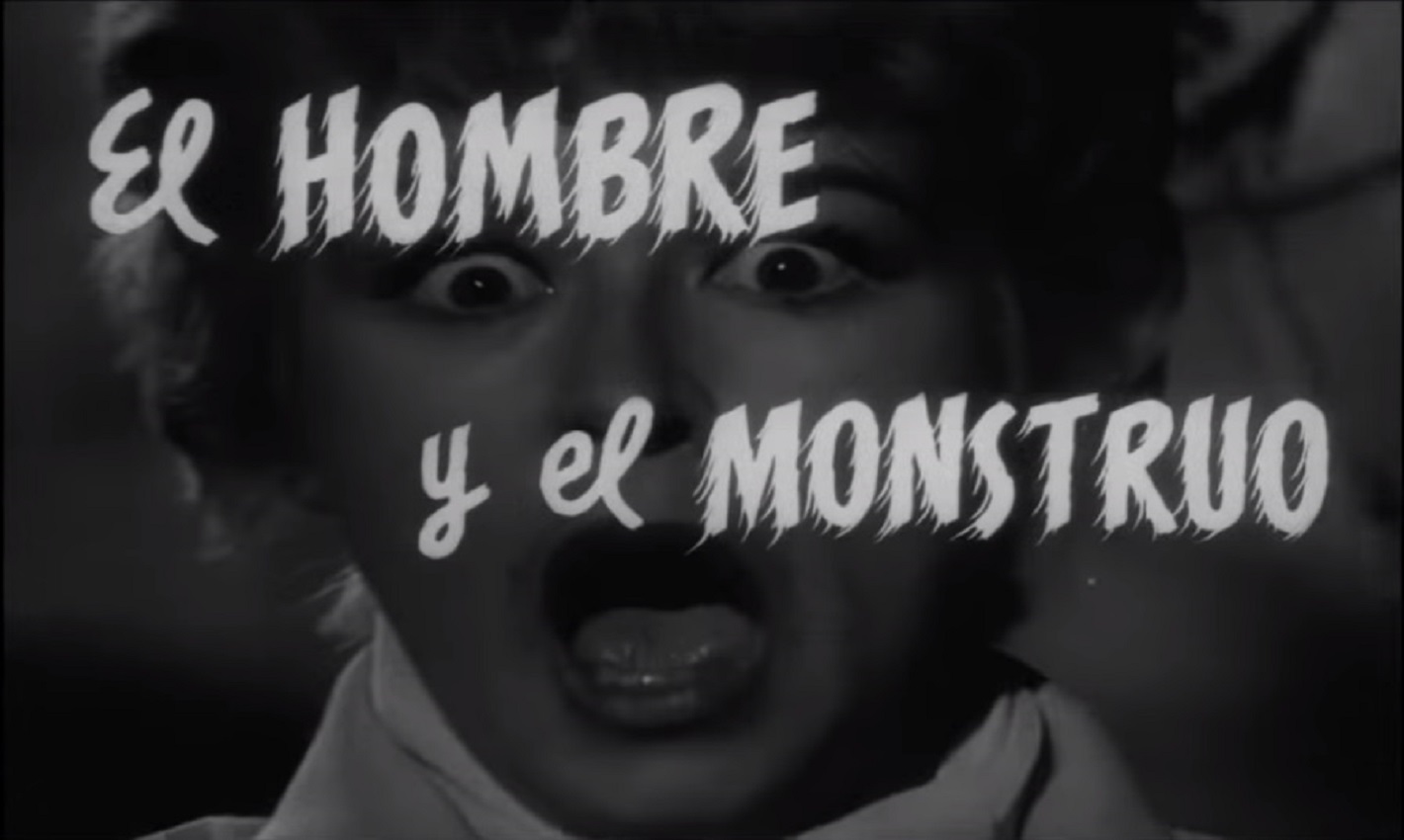
Not long after, another motorist discovers the woman’s car, nearly crashing into it himself as the thing was left jutting out into the road. As the man inspects the scene, the still-unnamed woman resurfaces, now with large scratch-like gouges scarring her face. The man seeks help, unwittingly finding his way to the same villa in which the woman was attacked. However, instead of running into the assailant, he is instead greeted by an older woman. “Greeted” may not be the proper word as the woman looks less than thrilled by her unannounced guest, not only silently refusing to help the man, but also closing her door in his face.
The man returns to the injured woman only for her to die in his arms seconds later. The remainder of the film’s opening credits begin to roll as police and paramedics clear out the accident scene and haul away the woman’s body. There’s no mention of who actually called to alert them or when, but I can’t imagine there was much of a rush in the effort since the victim was already dead.
We soon learn that the man is named Richard Sandro, or Ricardo Souto in the original Spanish language version of the film. A music journalist, Richard has traveled to the village seeking a pianist of disputable fame (seriously, I’ll have more to say about this later) named Samuel Manning (Enrique Rambal, who appeared in 1962’s The Exterminating Angel), who unexpectedly retired and moved to the area sometime prior. Richard is surprised to learn that Manning’s residence is none other than the home where he met the old woman. However, he’s not too surprised to learn that locals avoid the place as they believe the woman to be a witch. Richard’s choice of word may have started with a different letter.
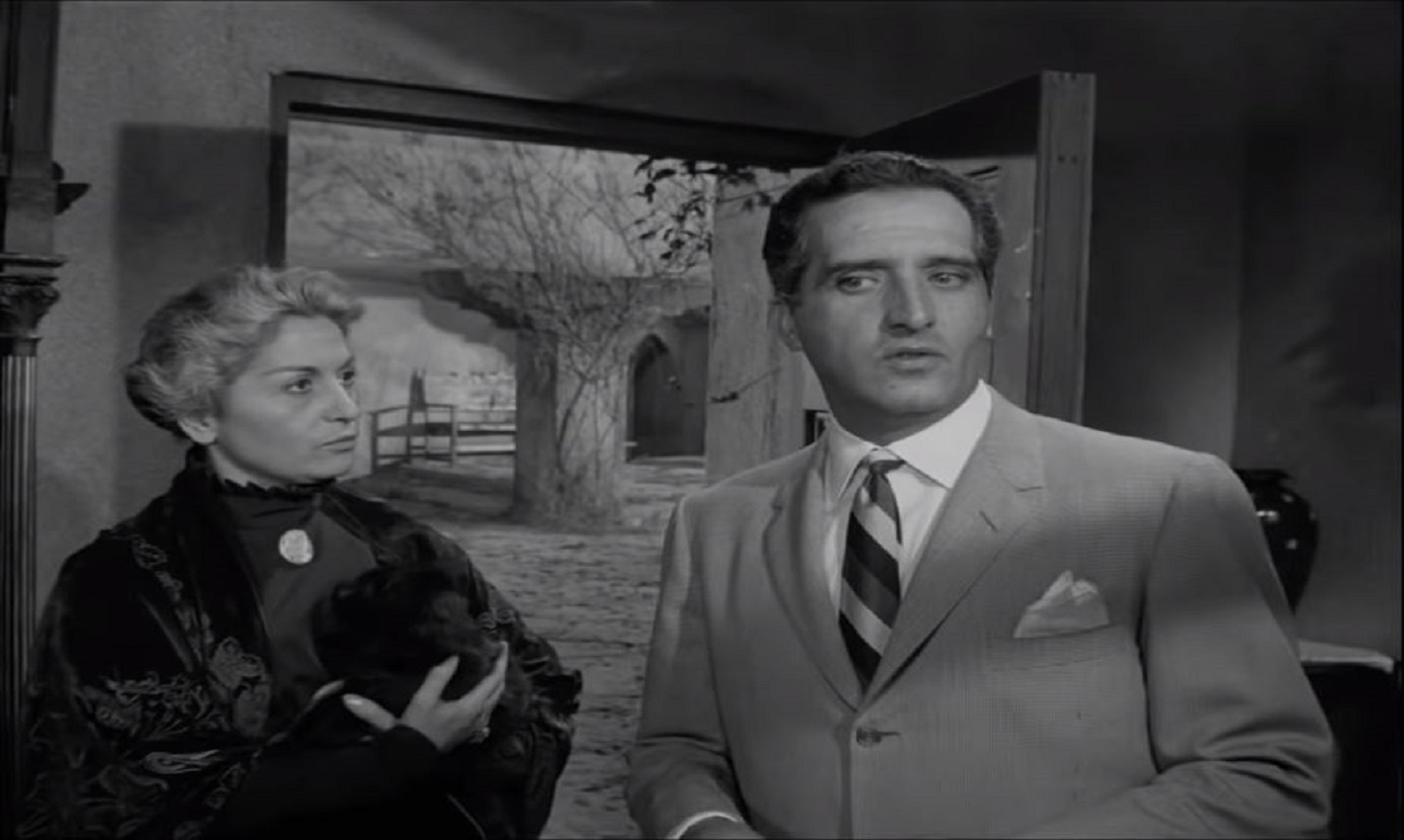
Richard returns to the Manning home, meeting the musician, as well as his new protégé, Laura (Italian-born actress Martha Roth). Manning informs Richard of Laura’s upcoming debut performance. However, Richard once again encounters Manning’s mother, who quickly and rudely orders him to leave at once. Before finally departing, Richard informs Manning where he will be staying. It isn’t long before Laura comes to pay him a visit regarding Manning and her own concerns for the man.
As Laura has this meeting with Richard, Manning remains back at home with his mother. While he initially asks about Laura’s absence, the conversation quickly shifts to Manning himself. It’s during this sequence that we are informed that Manning was actually a rather untalented musician who sold his soul to Lucifer in exchange for becoming the world’s best pianist. The trade-off, however, is that Manning turns into a violent monster every time he plays, forced to lock himself away in order to prevent harm from befalling others. Granted, these attempts to protect others didn’t help the poor girl killed in the opening sequence, as well as at least one other victim.
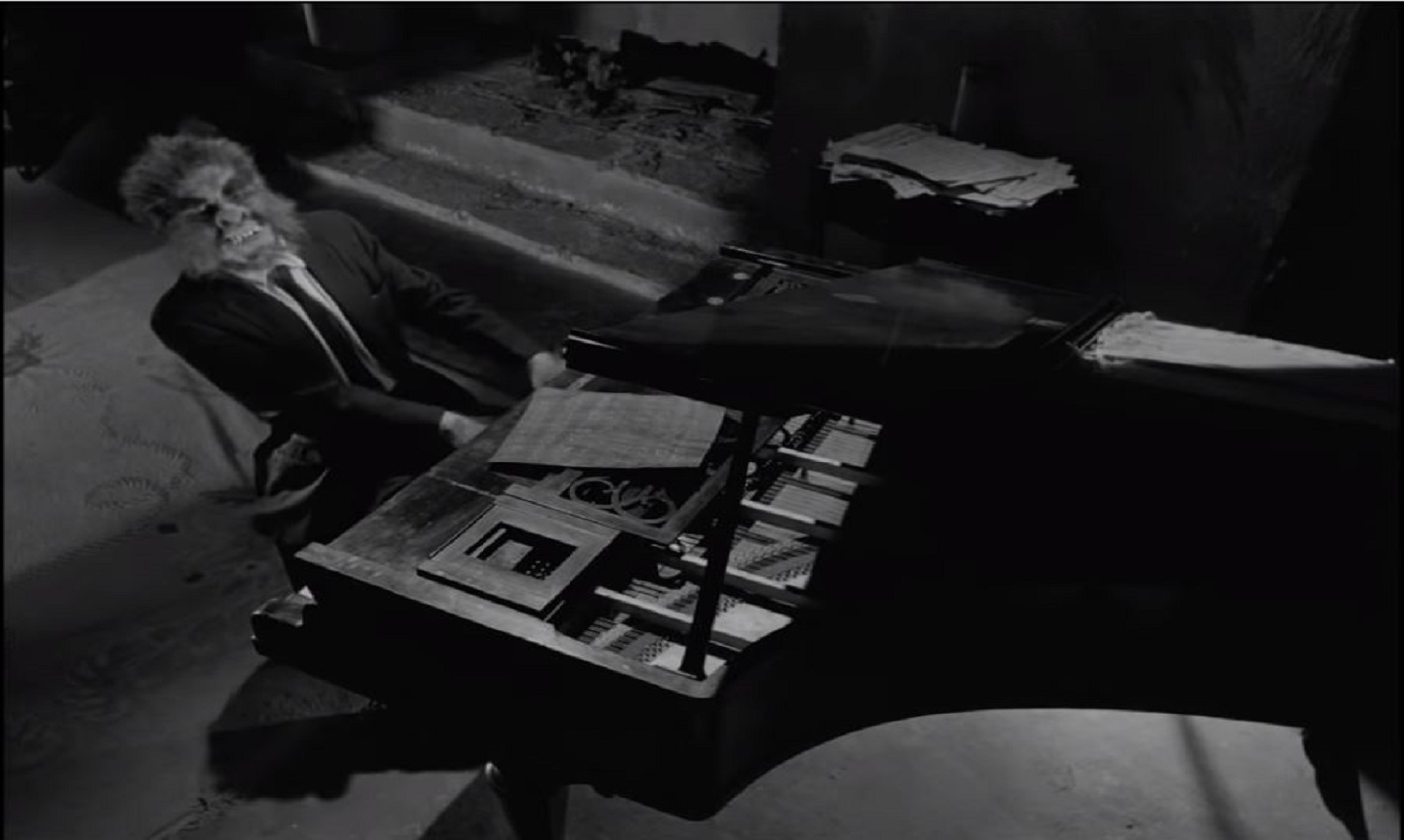
Determined to learn more about the enigmatic pianist, Richard returns to the man’s home later that evening, essentially breaking into the place. During his search, Richard discovers another morbid little secret that Manning has been keeping before making off with a peculiar looking piece of sheet music. This leads to the deaths of a few background characters as Manning’s possessed form attempts to retrieve it. It should probably be pointed out that while he is fully aware of the demonic form he takes on when playing, Manning never recalls his actions once reverting back to his normal human form. So, there’s never any guilt to be felt for all the innocent lives he claims.
A flashback sequence reveals a little more of Manning’s backstory. However, this backstory is more than a little confusing and, at times, somewhat contradictory. The sequence paints Manning as never having tasted fame before his deal with the Devil, and pretty much becoming a recluse immediately afterwards. As such, not only does this contradict Richard’s referring to the man as a “successful musician” in the film’s early moments, but also gives Richard no valid reason for wanting to find him in the first place.
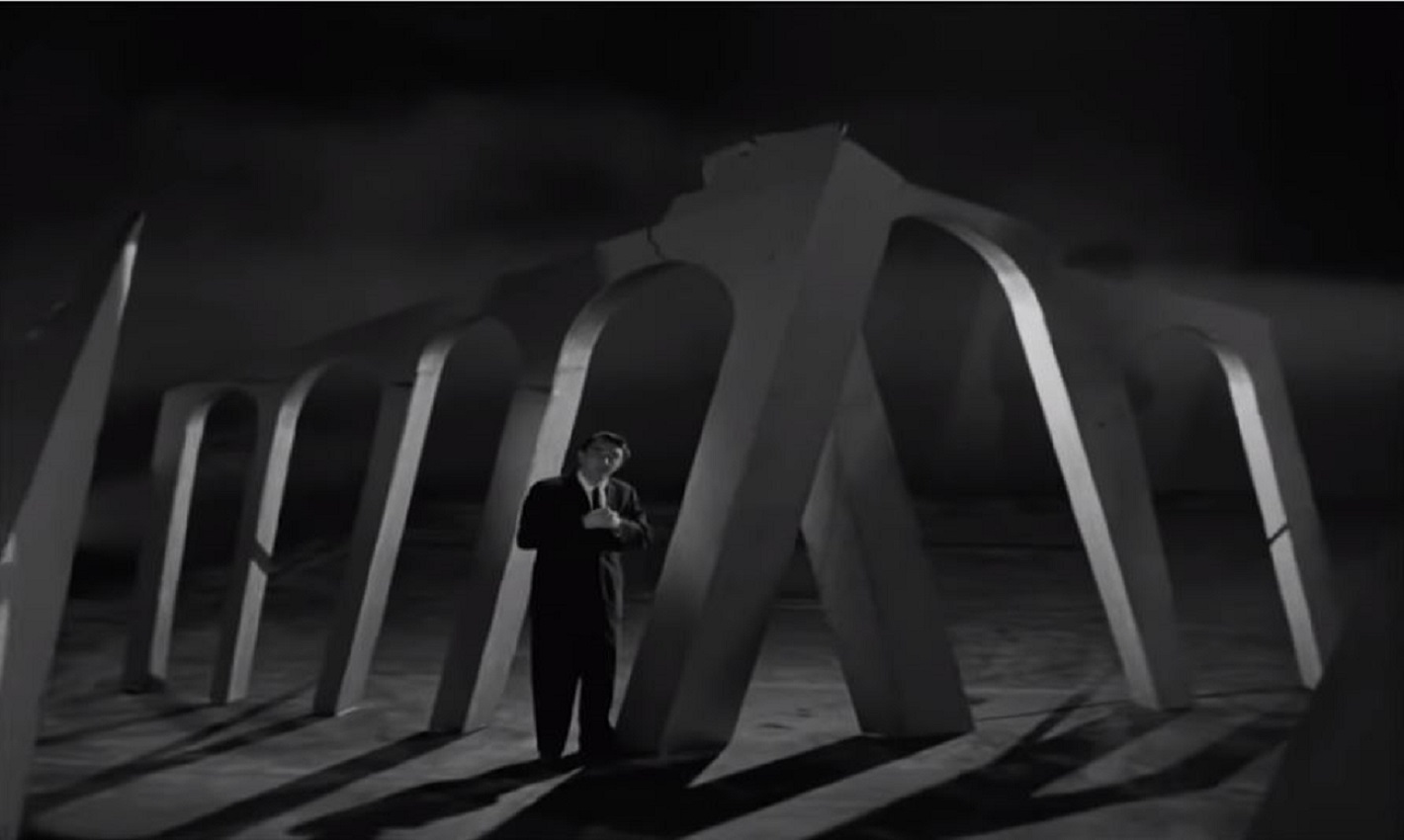
This sequence also shows how Manning first obtained the peculiar sheet music, but gives little explanation to how the person he claimed it from obtained it. There’s a claim from Manning that these two are the only ones to have ever heard this piece played. That is, if you exclude the entire audience of people that just heard it performed moments prior.
The film reaches it climactic conclusion at Laura’s debut performance, in front of a full house no less. As should have probably been expected, things go badly. In retrospect, taking up teaching was clearly not one of Manning’s better ideas, arguably worse than that whole “selling your soul” business, but hey…. “poor decision making” is the basic plot point of countless hours of films!
Despite some gaps in logic and reasoning creating craters in the film’s plot, The Man and the Monster is actually a rather admirably crafted horror tale, albeit one with notable similarities to more better-known tales. While the plot will undoubtedly draw some comparisons to “Dr. Jekyll and Mr. Hyde”, there are just as many (if not more) nods and comparisons to Goethe’s “Faust” to be found, as well as a few scenes that evoke similarities to “The Phantom of the Opera”.
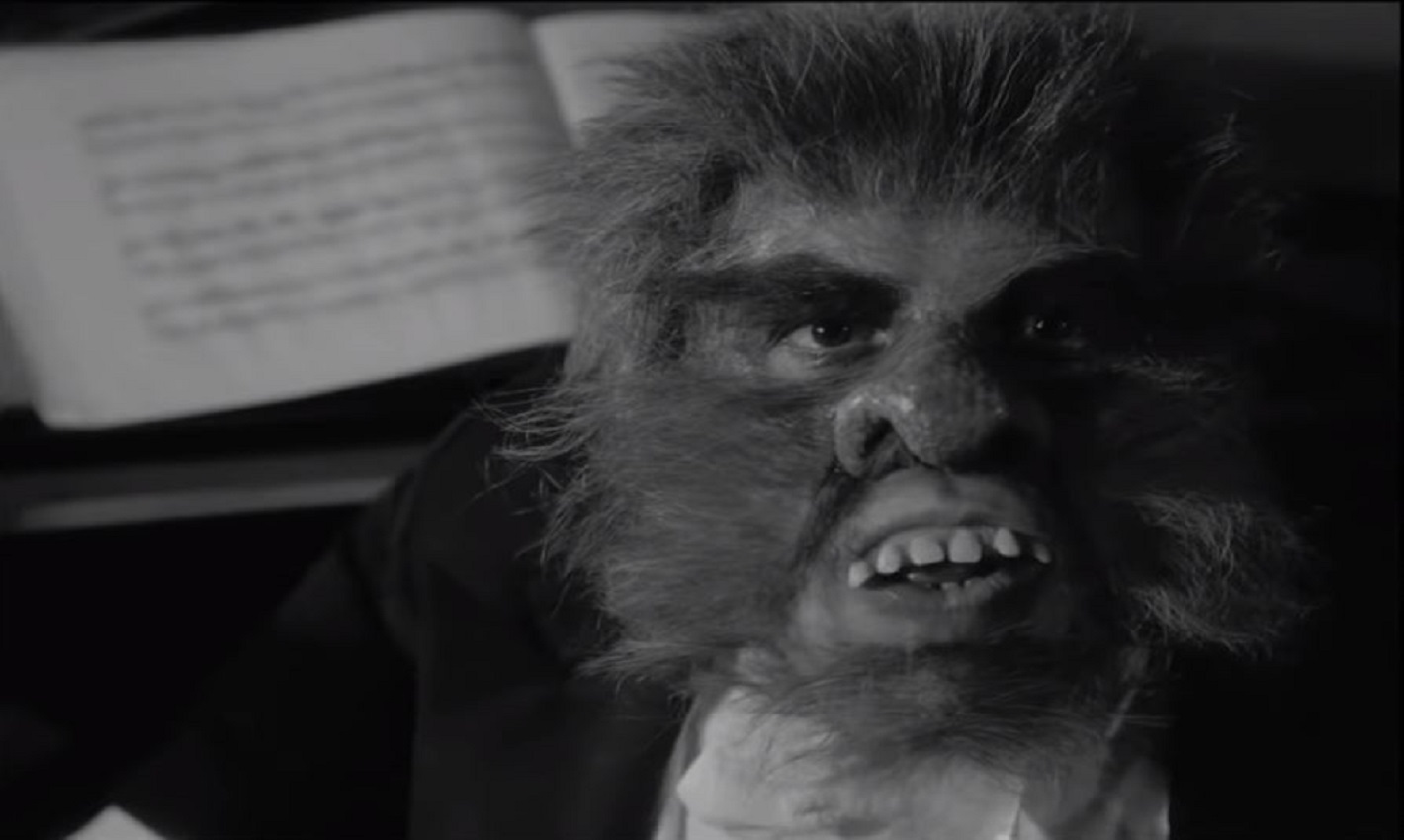
The film’s performances, while not exactly “standout”, are solid throughout with Rambal giving what I consider to be the film’s most ranged performance as the tormented pianist. Pacing, dialog, and set dressing are all also above what’s found in your average vintage low-budget affair. In fact, besides the notable incongruities found throughout the plot, the film’s only notably weak point is in the make-up effects used to create Manning’s demonic form. While featuring a full facial prosthetic that I’m sure took some effort to create, the effect leaves Manning darker form looking more cartoonish and comedic than frightening or intimidating.
Overall, The Man and the Monster is a highly enjoyable film, even if its story seems more than a little reminiscent of others before it. While I would generally recommend watching the original language version of the film, the English dubbed version also features some solid voice acting, although a couple minor sub-characters do come across sounding a little more “country bumpkin” than they probably should.
The Man and the Monster is available on a dual-language DVD (released by Casanegra Entertainment way back in 2007) which can be picked up for between $10-$15. The film is also available to watch on Youtube with original Spanish audio, but the dubbed version was featured on an episode of the USA Network’s Commander USA’s Groovie Movies, which I’ve linked below.
 Horror And Sons
I love the dream-like, atmospheric Mexican horror films from this period. My favorites are The Witch’s Mirror, Curse of the Crying Woman, and of course, The Brainiac is sheer insanity! I haven’t seen this one, but it looks intriguing!
LikeLike