
Listen to the following review with the audio link above
Greeting, ghoulies! I’m your host, Dustin J. Fallon, and welcome to another Horror And Sons film review!
After discussing a pair of new release films with our previous reviews for Hold the Fort and Round the Decay, I wanted to take things back to an older era of film. Truth be told, I proactively try not to review multiple films of the same era consecutively, if only to try to keep things from feeling too “samesy”. It’s something of a factor in why I don’t review that many newly released films, or not nearly as many as most of the more contemporary websites. That’s not a diss. Most of them are great at what they do. However, as this site has always been little more than a reflection of my personal viewing habits, I’ve always just sort of hoped and prayed that at least a few people would be interested in reading about… and I guess now listening to… me rambling on about whatever random film I felt like yapping about that week. In those regards? Yeah, I think we’ve done pretty good.
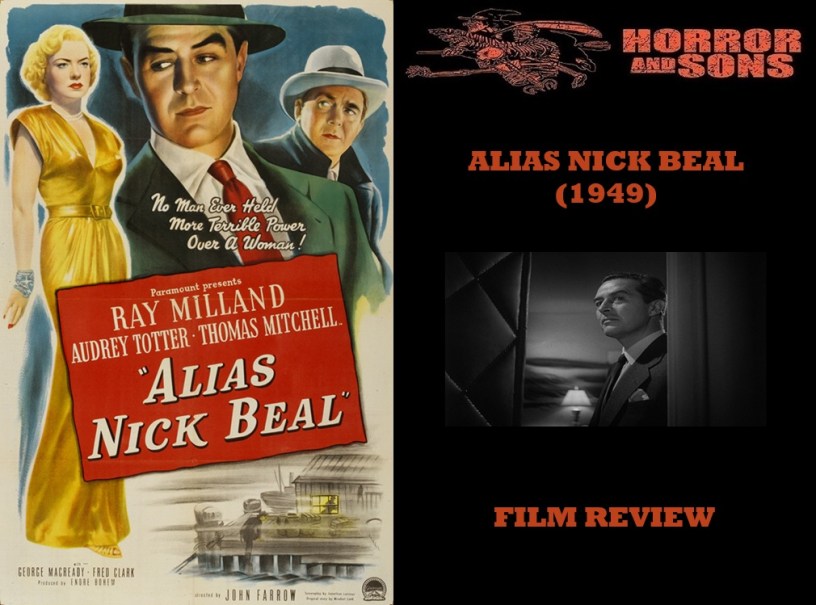
Really, none of this has anything to do with today’s film topic, 1949’s Alias Nick Beal, directed by John Farrow. Farrow wrote and directed numerous films such as Night Has A Thousand Eyes, the Oscar-winning Around The World in 80 Days, and the John Wayne-starring Hondo, which many listeners of my age group will definitely remember watching in “restored 3-D” on their TVs back in 1991. As birth control clearly wasn’t a thing during his era, Farrow also spawned several children, including the well-known Mia, Tisa (of Lucio Fulci’s Zombie), and like 5 other Farrows that you’ve probably never heard of. Alias Nick Beal is based off a screenplay by Jonathan Latimer, who also wrote the 1941 “supernatural comedy” sequel Topper Returns, the aforementioned Night Has A Thousand Eyes, and like 30-something episodes of “Perry Mason“.
MUSIC NOTE: Alias Nick Beal features a score from composer Franz Waxman, who also composed scores for 1941’s Dr. Jekyll and Mr. Hyde (starring Spencer Tracy), Alfred Hitchcock’s 1954 thriller Rear Window (starring Jimmy Stewart), and perhaps most famously, 1935’s Bride of Frankenstein (starring Frankenstein, Doctor and Monster)
As this is a much older film, I’ll be talking more in depth about it than I might a newer release, so expect a few spoilers along the way. That is, if you can really “spoil” a nearly 80-year old film. You’ve had time, bitch. Not my fault you ain’t watched it.
Alias Nick Beal stars Ray Milland as the titular lead character. Now, I’m not going to attempt to give a detailed history of Milland’s career. That would take far too long and I’d probably do a shitty job at it anyway. As I’m sure some of you already know, Milland starred in 1944’s The Uninvited, which, really… is as much of a love story as it is a ghost story, but definitely worth watching nonetheless. He soon followed that up with a Best Actor Oscar for 1945’s The Lost Weekend. I’m also sure that many of this site’s readers know Milland from the numerous genre films in which he appeared in the second half of his career, such as 1962’s “post apocalyptic” thriller Panic in Year Zero! (which Milland also directed), The Premature Burial and X: The Man with the X-Ray Eyes for Roger Corman, and as cantankerous old patriarch Jason Crockett in the 1972’s Frogs, among others.
Alias Nick Beal also stars Thomas Mitchell, a highly prolific character actor who appeared in some pretty big films, such as Gone With the Wind, It’s A Wonderful Life, and 1939’s Stagecoach, which won him an Oscar for Best Supporting Actor. Mitchell, who gets third billing here despite being the film’s lead character, stars as District Attorney Joseph Foster. Foster has made quite the name and reputation for himself due to not only his integrity and tough stance of crime, but also his kindness and generosity, thanks to the center for the “welfare and rehabilitation of delinquent youth” (males only) that he runs on the side. As the film opens, Foster is looking to further this reputation by attempting to successfully prosecute a “disreputable businessman” (aka “crime lord”) named Hanson, but has just discovered that his key piece of evidence may have been destroyed.
Actually…. this film opens with Foster standing in the pouring rain on the steps of what appears to be some sort of government building, looking forlorn while a monolog from Milland informs us that every man has a weakness that can lead to his downfall and undoing… and that we are about to witness Foster’s.
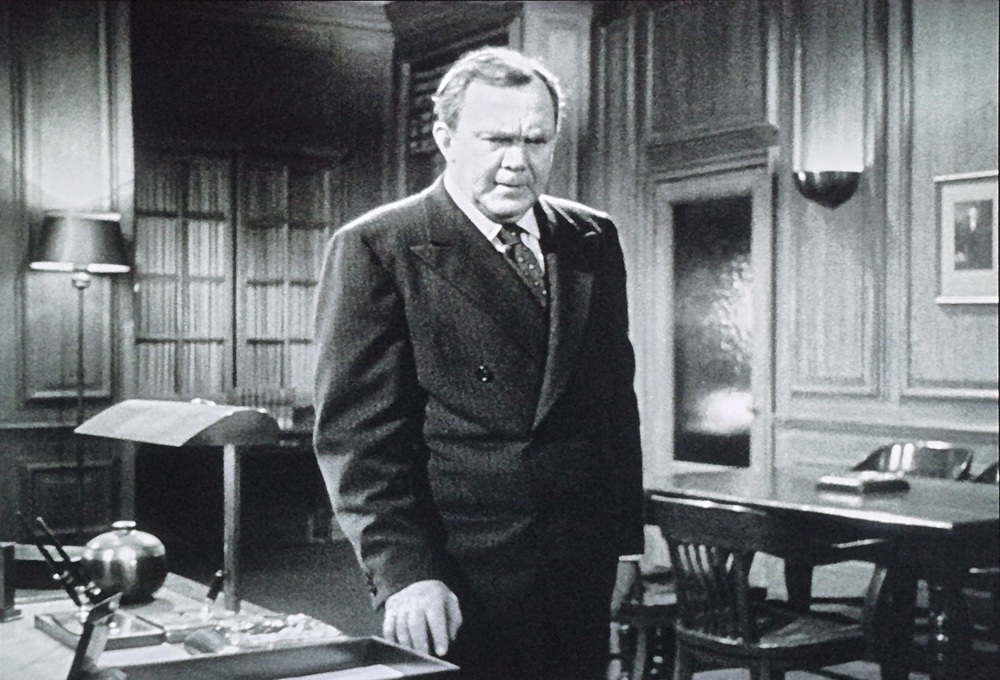
Foster turns down an offer of a “show of support” in the upcoming gubernatorial election from Hanson’s crooked lawyer. Honestly, I’ve watched the film a few times and I’m still not exactly sure who this man is. For sake of discussion, I’m calling him a lawyer. Either way, Foster’s rebuttal only earns him a vague death threat in response. This threat doesn’t phase Foster very much, but the frustration at losing the opportunity to finally put Hanson away does get the best of him, and he makes the offhand comment that he would give anything to seal the conviction… even his soul.
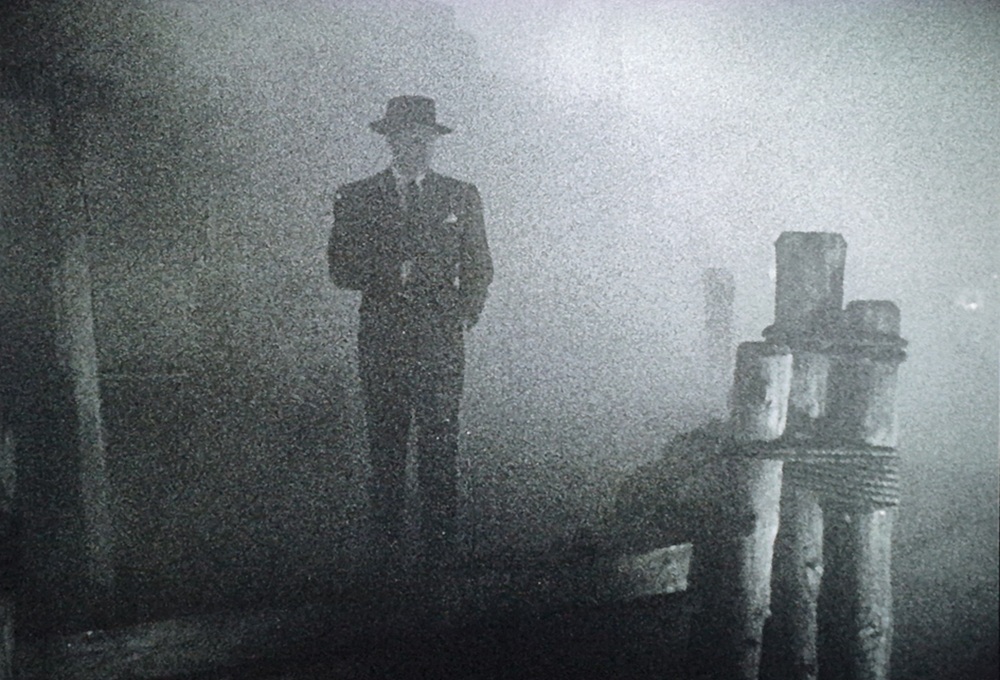
Luck seems to shine Foster’s way as he soon… like, immediately “soon”… receives a tip that the evidence was not actually destroyed, but instead hidden, and that it can still be obtained. He agrees to a meeting at a small dockside bar, one ran by Creature from the Black Lagoon‘s Nestor Paiva. You know the place. You’ve seen it in numerous old movies. “Questionable types” hang out there. Anyway, it’s here that we meet the titular… heh heh, titular… Beal. The character makes a grand entrance, materializing from a fog covered alleyway as if out of thin air. This slight flair for the dramatic becomes something of a trademark for Beal as the character frequently disappears and reappears in and out of shadows and around corners. He’s kinda like Michael Myers, albeit less likely to kill you and, well… more likely to make you kill yourself.
In a what may have been a deliberate choice, Milland wears the same suit and hat throughout the entire film. Okay, so he loses the hat in a few scenes, but the look does become something of a trademark for the character. While a very minor detail, I did think it was a cool piece of trivia worth mentioning.
After some very brief and incredibly vague conversation regarding how he even had knowledge of their existence, Beal leads Foster to the location of the mobster’s record books. Weighing the good it can do for his community against the crime he himself would be committing, Foster steals the records. As expected, this does lead to Hanson’s conviction. It also leads to Foster being chosen by his political pals (in the Reform Party, if I’m correct) as their candidate for governor.
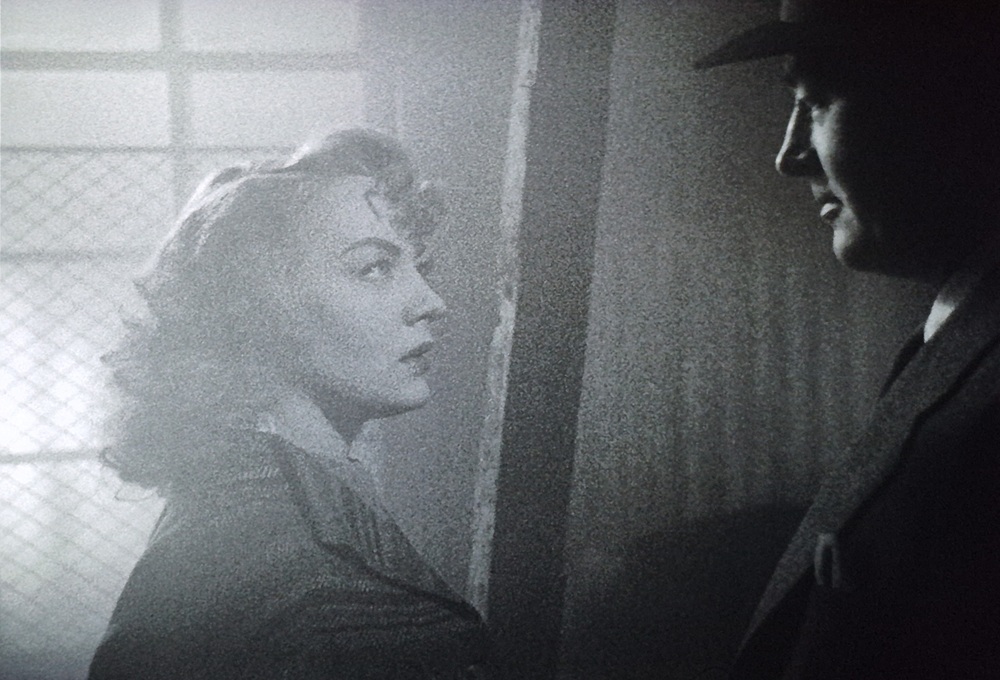
Meanwhile, Beal sets his sights on a down-on-her-luck actress named Donna, played by Audrey Totter, who’d previously appeared in 1947’s The Postman Always Rings Twice. Offering her things like fur coats and jewelry-studded cigarette cases, Beal convinces Donna to play a role in his schemes. In exchange for these items, Donna will take a job as a secretary at Foster’s youth center. Granted, there’s no mention made of the man actually needing a secretary, but fuck it. Let’s just go with it.
Not everyone is so easily swayed by Beal’s charm and money, including Foster’s wife, Martha (played by Geraldine Wall), who has an immediate distrust for the man. Also of note is Foster’s partner at the “Boy’s Club” (call it what it is; they do), Reverend Garfield, who feels certain that he has seen Beal somewhere before. I’m sure you have, good sir. I’m sure you have. Naturally, Beal isn’t overly fond of the Reverend either, recoiling from the holy man’s presence when near. The Reverend is portrayed by actor George Macready, another highly prolific character actor who appeared in films ranging from 1945’s The Monster and the Ape up to the Count Yorga films of the early 1970s’, with MST3K riffing victim The Human Duplicators tossed in along the way in 1964.
For some extra film connections, Milland and Macready would both later appear in the 1969 TV movie Daughter of the Mind. Milland would later appear in 1976’s Look What’s Happened to Rosemary’s Baby, the TV movie sequel to Rosemary’s Baby, which (of course) starred Mia Farrow.
Foster soon meets a man named Finch (Douglas Spencer – The Thing From Another World or This Island Earth), who served as Hanson’s bookkeeper. Finch informs Foster that the evidence used to convict Hanson was surely faked as he himself destroyed the original books. Now followed by Hanson’s men, Finch needs to leave the city and seeks money from Foster to do just that. Otherwise, Finch will have no choice but to seek protection from the police, meaning that he will have to confess his crimes… as well as Foster’s. Foster arranges a meeting for later that evening in order to pay the man. However, Finch, who really did destroy the books, was put up to the task of visiting the D.A. by none other than Beal, and reports back to him first. As reward for his efforts, Finch is lured by Beal into the ever-present fog and killed.
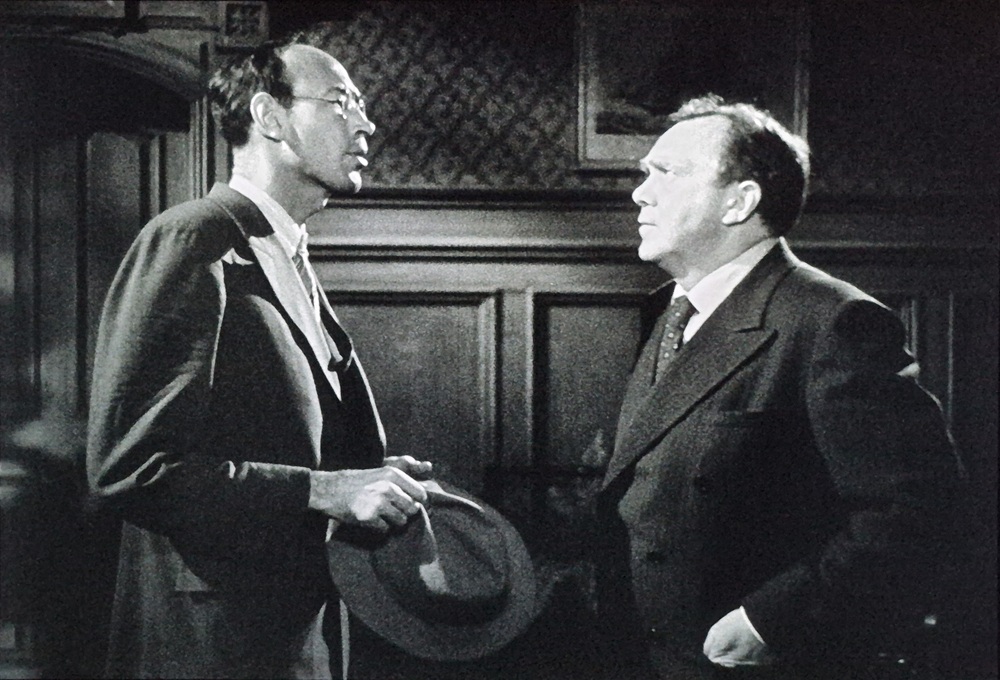
Although he’s made quite the name for himself, Foster still appears short the votes needed to win the election over his opponent, who happens to be named Kennedy. Whether this was an actual reference to (presumably) John F. Kennedy or just “somewhat kinda” coincidental, I can not say. Still coerced by Beal, Foster becomes the thing he once stood against, making deals with crooked businessmen and politicians in exchange for their public support. While it does indeed earn him the election, it costs him the respect and support of his Party allies.
Beal continues pulling his strings and playing his games. This includes having Donna play the role of “adoring follower”, steering Foster’s affections towards this much younger woman and away from his wife. So far away, in fact, that she separates from their marriage… a fact Foster seems little concerned about. This manipulation includes a fantastic, somewhat comedic sequence in which Beal helps Donna prepare her dialogue for an encounter with Foster where she’s supposed to reveal “feelings” for the man, with Beal also “predicting” Foster’s responses with word-for-word accuracy.
Eventually, Beal begins playing his endgame, forcing Foster into either offering him an albeit small political position or forfeiting his soul. Of course, this possibly being THE “Prince of Lies”, the deal is worded so that Foster doesn’t really understand what he’s agreeing to. That said, Foster doesn’t seem to be overly bothered by the semantics. Especially not once he learns that’s he’s the prime suspect in Finch’s murder.
Although Foster’s conscience does finally resurface, and the man does renounce his misdeeds, it is ultimately the power of religion that saves the day. This dynamic is sure to feel more than a tad heavy-handed from many contemporary audiences, and will probably elicit a few eyerolls. I say this because that was my response. Personally, I think that tale would have benefitted from more of a downbeat ending, which may also give the religious repercussions more potency. That said, as the film concludes seemingly ignoring such things, I guess Foster will just have to “Go with God” when those legal ramifications and criminal charges start rearing their ugly heads in his immediate future… and, oh Lord, they a comin’!
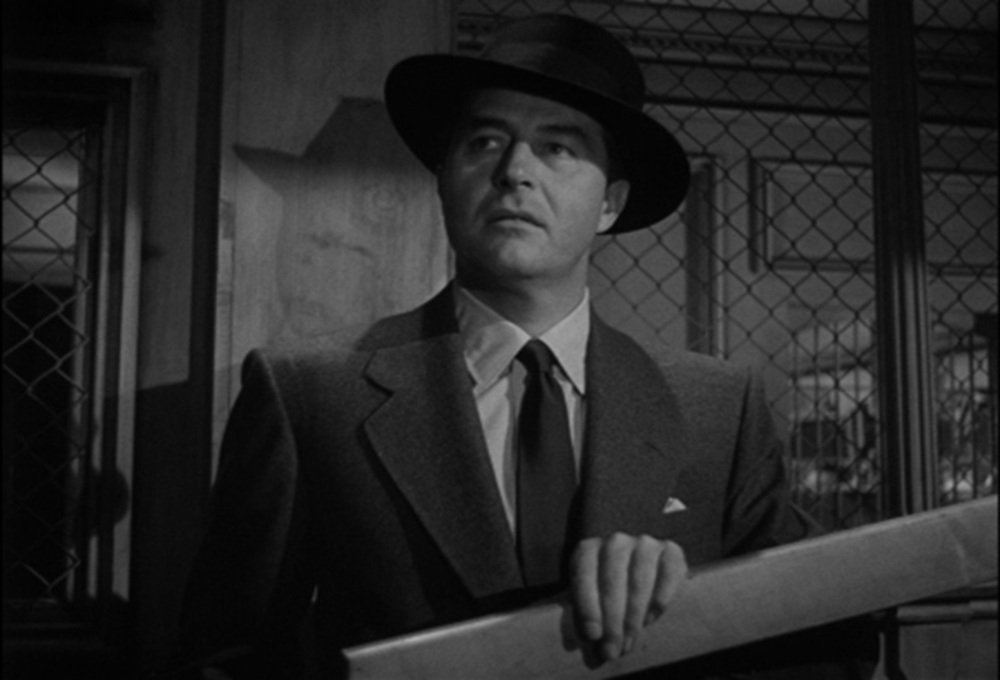
I’m truly not sure if it’s accurate to call Alias Nick Beal “film noir”, although it most surely features many elements found in films classified as such. We’ve already discussed the use of shadow and fog, as well as our title character’s ability to use them as part of their mystique. We have our “femme fatale”, appearing here in the form of Donna. We have a tale built on greed, corruption, and deceit. Finally, we have our anti-hero. Wait… was I not supposed to be rooting for the “bad guy”? Honestly, it kinda hard not to when he’s not only clearly enjoying his work, but proves to be quite talented at it as well.
While Alias Nick Beal is quite the compelling film, tales of man’s temptation by evil are nothing new. Not even remotely. Thankfully, Alias Nick Beal is helped along by it’s performances. Mitchell does a commendable job as “Foster”, a good man so focused on what he believes to be the greater good that he becomes blind to the harm he’s causing along the way. That said, Totter’s emotionally damaged “Donna” may appeal more for our sympathy, as one regrettable moment seemingly destroyed her life. Of course, some of that sympathy goes right out the window when one remembers that she’s selling her soul for material possessions.
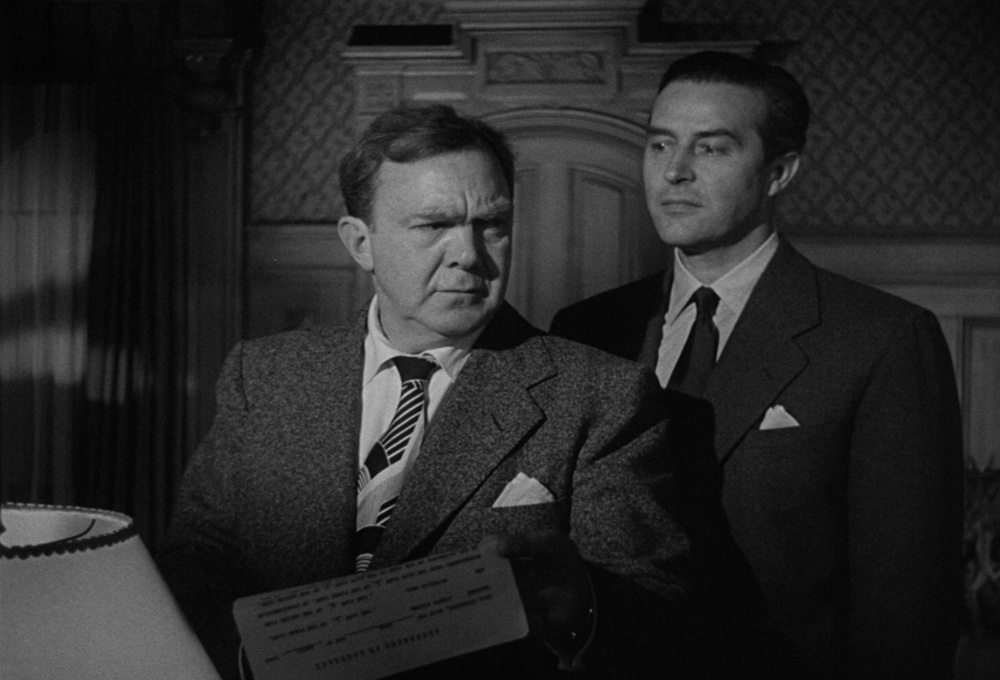
As for Milland. Well, there’s a reason he got top-billing as he is undoubtedly the film’s star. As previously mentioned, Milland plays the role as someone who is not only confident in their ability, but also clearly enjoys what they do… and why the Hell shouldn’t they? Beal, whatever his true identity, has to experience some form of “ego boost” from manipulating the weak-willed and easily corruptible, which probably isn’t too different than what his “subjects” are feeling after having their wishes and desires come true. However, for someone such as himself, tainting and claiming the soul of an “good and honest” man must be the ultimate “high”, as demonstrated by Milland frequently grinning at the conclusion of each scene.
Okay…let’s wrap this baby up.
I really enjoy Alias Nick Beal. The film just does a lot of things well. There’s also some fantastic scene transitions on display, including one proceeding Finch’s demise. The fog into which Beal once again disappears appears to darken just as the screen begins fading to black, only to open back up revealing the back of a Foster’s dark suit as he walks into frame for the next scene. However, somewhat unfortunately, I don’t see the film discussed very often by other reviewers and outlets. Maybe this is because the film doesn’t feature many of the tropes that we commonly associate with the horror genre. Truth be told, Alias Nick Beal is much more a case of man undoing himself than it is anything supernatural. So, in those regards, maybe it’s a “drama”. Whatever the genre, it’s definitely worth checking out.
As of this writing, Alias Nick Beal is not available on any streaming site. The film was released to Blu-ray in 2021 by Kino-Lorber. That release is still available and features a wonderfully clean transfer.So, if you really want to watch the film, that may currently be your only route.
 Horror And Sons