

Season 1, Episode 18: “If the Shoes Fit…” – Original Airdate: May 12th, 1985
Directed by Armand Mastroianni (He Knows You’re Alone, The Supernaturals, “Friday the 13th: The Series” episodes)
Teleplay by Mastroianni, based on a short story by Louis Haber
Dick Shawn (It’s A Mad, Mad, Mad, Mad World, 1983’s Angel) stars as “Bo Gumbs”, a boastful and boisterous politician campaigning for the office of governor, presumably somewhere in the “Deep South” and possibly some years in the past as the clothing, decor, and behaviors presented in the episode do feel somewhat dated even by 1980’s standards. Gumbs campaign is one built entirely on facade, having no real stand on any pressing issues and perhaps no real understanding. For him, politics is nothing more than a “show”; working up a crowd with a joyful tone, but actually saying nothing.
As the episode begins, Gumbs finds himself booked into a small inn, preparing to host the (presumably just as small) town’s annual barbeque festival. On hand to attend to Gumbs is a young bellhop named Peter (John Zarchen, who also appeared in Mastroianni’s The Supernaturals, but may be best remembered as “Keith” in Heathers). Peter initially seems naive, but eager to please. It quickly becomes evident that the young man may know a little more than his demeanor belies, with his presence even beginning to take on something of a maleficent air.
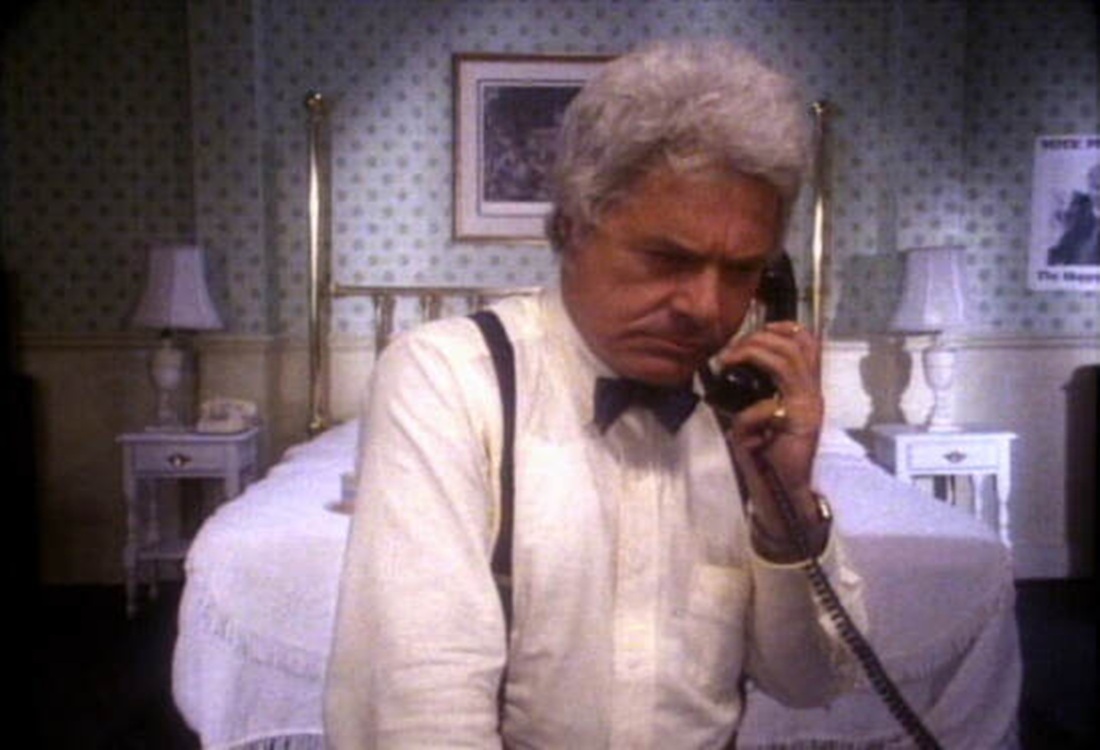
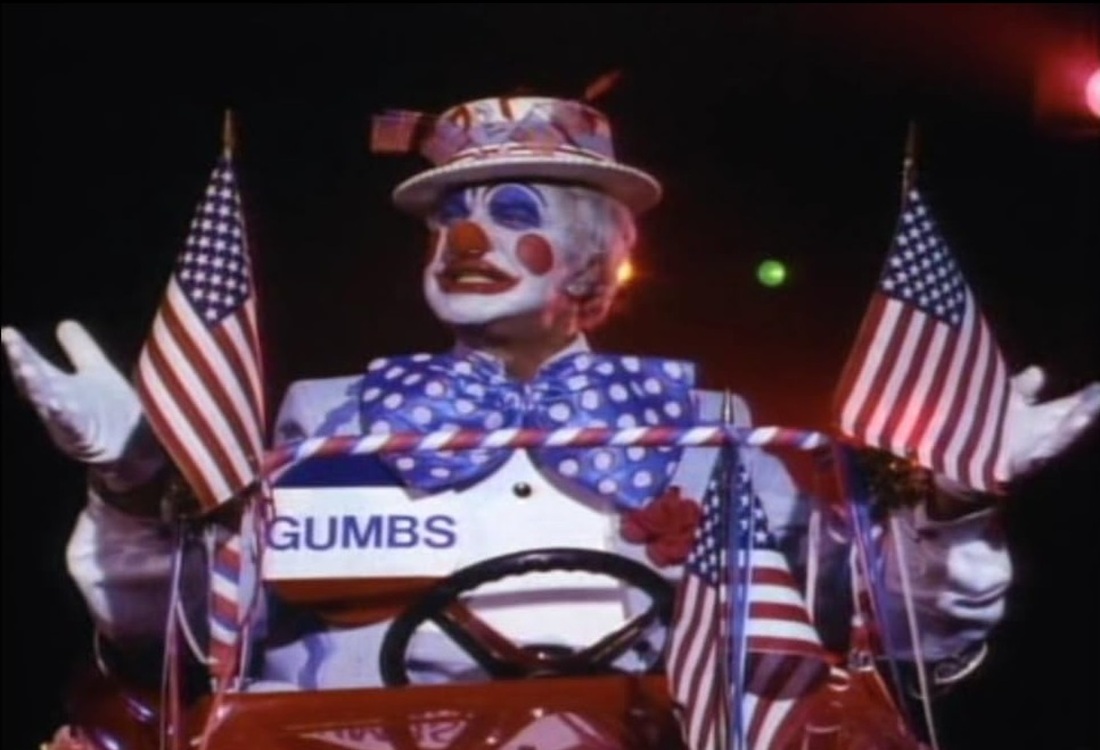
Things begin unravelling for Gumbs when a mix-up with his wardrobe leaves him with oversized pants. This is followed by an oversized jacket, bowtie, and shoes. By episode’s end, Gumbs has become a literal clown; a manifestation of all the lies and falsehoods that he presents to the public and a reflection of the “joke” he has become. Peter, meanwhile, reveals his true role; acting as something of a tour guide on Bo’s journey to his final realization.
Obviously, there’s a heavy cynicism towards politicians to be found within “If the Shoes Fit…” The entire episode is built around this cynicism. As such, the episode may be more relevant for many now than it was when it originally aired. Either way, the episode is still fairly entertaining, if not entirely effective. Shawn gives a really fun performance, seemingly enjoying his role and the opportunity to frequently go a tad over the top with his reactions and hysterics. While far from being one of my favorite episodes of the series, much less the season, “If the Shoes Fit…” is far from the bottom of the pack, and may be one of the stronger comedically-tilted episodes of the series’ first season.
WRITER CREDITS: “If the Shoes Fit…” appears to be Haber’s only writing credit, although they are listed as an assistant on multiple 1st season episodes.
Season 1, Episode 19: “Levitation” – Original Airdate: May 19th, 1985
Directed by John Harrison (Tales from the Darkside: The Movie, 2009’s Book of Blood)
Based on a short story by Joseph Payne Brennan (whose stories were also adapted for the 1960’s Boris Karloff-hosted television series, “Thriller”)
A young man named Frank (Brad Cowgill – Gotcha!, Hollywood High Part II) discovers that “The Great Kharma” (Joe Turkel – The Shining, Blade Runner), a legendary illusionist who seemingly vanished (pun intended) years prior, is now performing as part of a small back-alley carnival. An aspiring magician himself, Frank attends the show hoping that the man performs some of his most famous illusions, but is shocked and saddened to find him only performing the most basic and simplistic of parlor tricks to a small, generally unenthused crowd. What Frank had really hoped to witness tonight was a “trick” rumored to have been taught to Kharma by the spirit of the great Harry Houdini, and one which has not been attempted in over 20 years: the act of wireless levitation!
After the show, Frank makes his way backstage to confront Kharma and ask why he didn’t perform any of his more intricate and elaborate illusions… namely the “wireless levitation*. Kharma initially denies the existence of such a trick, claiming that all levitation illusions are just that. Illusions, performed with the assistance of wires and/or optical effects. Frank persists, however, and Kharma finally admits to having attempted the levitation “trick” in the past, but warns that the feat requires too much energy and concentration from the magician performing it and, as such, is potentially dangerous. Still not content with the answer he has been given, Frank insults the older man before storming off in disgust.

REVIEWER’S NOTE: I understand that the story is trying to differentiate between the feat of actually floating in the air as opposed to being lifted with the use of wires and pulleys, but I’m pretty certain that “wireless” levitation is just called levitation.
As he attempts to leave, the magician’s current assistant stops Frank. She explains that Kharma’s last attempt at the levitation ended badly, which is why the man now refuses to perform the trick. Still not content, Frank attends the magician’s next show, only to interrupt with mocking comments and to reveal the “secret” behind each of Kharma’s various illusions. Furious at being “demystified” in front of his audience, the magician finally gives in and agrees to perform the levitation trick… on Frank. As one might expect, things do not go as either man might have hoped.
Truth be told, I never really cared much for “Levitation” when I first watched it as a child back in the 1980s (not that I watched it during its original airing). However, I’ve grown to appreciate it more as I’ve gotten older, presumably because the years having given me more understanding of the concept of karma (no “h”). There’s also a case of “toxic fandom” presented in the episode that I would never have noticed as a child, especially since I only first learned of that term within the last 15 years or so.

DIRECTOR AND COMPOSER: As I’m sure most of you already know, John Harrison also composed the scores for Creepshow, Day of the Dead, Effects, as well as the music featured within “Levitation“.
Season 1, Episode 20: “It All Comes Out In the Wash” – Original Airdate: May 26th, 1985
Directed by Frank de Palma, who directed multiple episodes of the series.
Written by Harvey Jacobs, who wrote other Darkside episodes, as well as episodes of the “Monsters” syndicated television series.
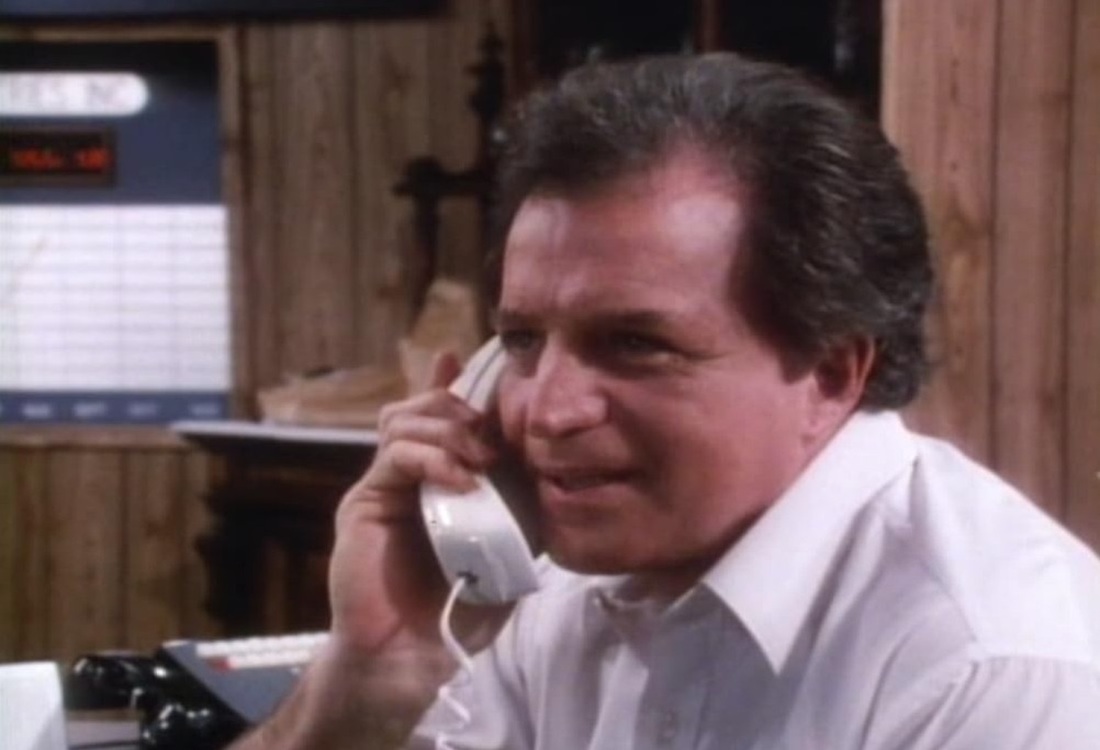
After receiving a tip from one of his associates during a night of heavy drinking, shady and unscrupulous businessman Carl Gropper (Vince Edwards – TV’s “Ben Casey”, Cellar Dweller) pays a visit to a Chinese launderer (the clothing kind, not the money kind) named Chow Ting (James Hong, he of nearly 500 film and television credits). Unlike most laundry services, Chow Ting doesn’t just promise to wash away stains; he promises to wash away guilt! In addition to agreeing to Chow Ting’s exorbitant prices, Carl also agrees to Chow Ting’s two most important demands; Carl must never speak of Chow Ting’s “special” services and he must never call or visit the man. Chow Ting claims that he will know when his services are needed.

Things start out well enough. Soon, Carl begins to see his arrangement with Chow Ting as being “taken off the leash”, becoming more conniving, conceitful, and cold-blooded than ever before. This leads to choices such as authorizing the killing of baby seals for use in the manufacturing of fur coats (those were still a thing in the 1980s), adultery, fraud, and even arranging the murder of a business rival. However, as his list of offenses continues to grow, so do the piles of unwashed clothing. As Chow Ting has not been by to collect recently, Carl begins to get a little nervous.
Weeks pass and Carl’s office is now covered in mounds of unwashed clothing. As the laundry continues to pile, so does suspicion surrounding Carl for his now multiple crimes and offenses. Becoming panicked, Carl breaks one of the stipulations to his deal. He calls Chow Ting. Reaching only the man’s answering machine, a hysterical Carl accuses the launderer of actually being the devil, out to steal his soul. However, it’s not until Chow Ting calls back that Carl is finally driven over the edge and forced to atone for his sins.
The episode manages to stay fairly lighthearted and comedic throughout despite the horrible things Carl does to people, and even the way he treats his own child. That said, you never once feel remotely sympathetic for the character, so his fate is well-deserved. The one thing that does stand out about the episode, and something that I consider to be more than a little disrespectful in retrospect, is that Hong is not listed in the episode’s opening credits along with Edwards. I get that, despite his numerous film and television credits up until that point, James Hong was not as “recognizable” a name in 1985 as he is today, nor would he have been considered the marketable “star” that Edwards was at the time. However, as his is one of the episode’s two central characters, one would think that he was important enough to have not been relegated to the closing credits.
While nowhere near one of my favorite episodes of the series, I’ve always found “It All Comes Out In the Wash” enjoyable enough.
SPREADING HIS WINGS: Fans of 1990s’ era PC gaming may be interested to know that de Palma co-wrote the scripts for the 3rd and 4th games in the highly-successful “Wing Commander” series.
WRAP-UP: Due to the somewhat “morality tale”-like comeuppances featured in all three, this trio of episodes arguably feel more akin to something found on “The Twilight Zone” than the other episodes of Tales from the Darkside‘s first season. While this certainly helped give the various episodes of the series some sense of variety and showed that the writers and producers were willing to try different things, there’s also some argument to be made that these dramatic changes in tone (and sometimes genre) from episode to episode did not help give it a sense of consistency.
Next entry… the last 3 episodes of Tales from the Darkside‘s first season. “Until next time, try to enjoy the daylight.”
 Horror And Sons
After binging through Tales from the Crypt a couple of years ago, I bought the Tales from the Darkside series set and started on it. Actually, “Levitation” is the episode I remember most distinctly from when the series first aired. It’s not a perfect episode — Frank’s disappointment and cynicism seems forced — but the payoff is quite memorable.
LikeLiked by 1 person