
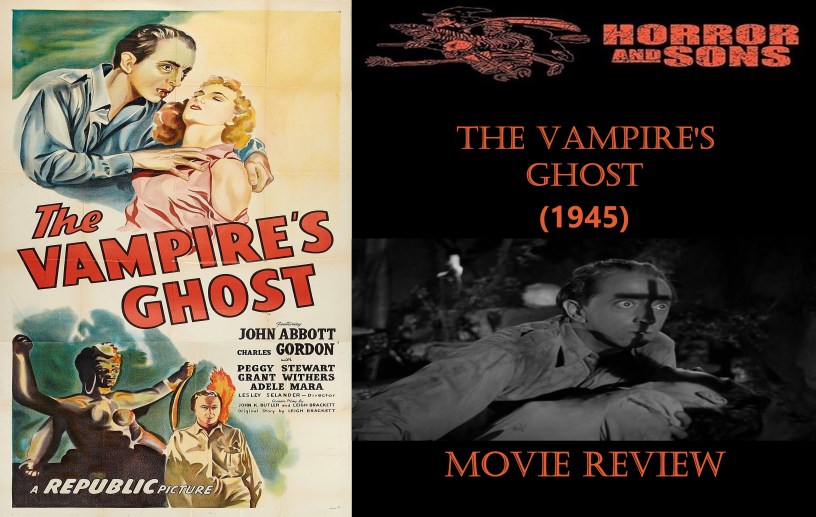
The Vampire’s Ghost is an American horror film that was produced by Republic Pictures and released to theaters in May of 1945. The film was directed by Lesley Selander, whose 40+ year career predominantly featured Westerns of the 1930s-1950s, but also included numerous stints directing television shows of the 1950s’, such as “Laramie” and “Lassie”. Fans of classic horror and sci-fi may know that Selander also directed Republic’s follow-up horror release, 1946’s The Catman of Paris (which will be mentioned a few times in this review), as well as 1951’s Flight To Mars. Regular readers of this site may remember that I reviewed The Film Detective’s Blu-ray release of Flight to Mars some time back.
The script for The Vampire’s Ghost was co-written by John K. Butler and Leigh Brackett. Butler, who also worked primarily in Westerns throughout the span of his career, had penned 1945’s The Phantom Speaks for Republic. In fact, The Vampire’s Ghost would later be paired with The Phantom Speaks as a double feature upon re-release of the films. Brackett, referred to by some as the “Queen of Space Opera” thanks to her numerous stories, books, and scripts dealing with the subject, had no film credits prior to The Vampire’s Ghost, but would later produce screenplays and early drafts for films such as The Big Sleep, Rio Bravo, Hatari!, The Long Goodbye, and Star Wars: Episode V – The Empire Strikes Back. You’ve probably heard of that last film. However, it should be noted that this particular Leigh Brackett never so much as lifted a finger to help the poor defenseless citizens of Haddonfield. Then again, it’s somewhat arguable that the other Leigh Brackett didn’t do much to help those people either. He sure didn’t help Ben Tramer.
TRIVIA: The success of The Vampire’s Ghost and The Phantom Speaks led to Republic producing two additional horror films the following year, in 1946; the aforementioned The Catman of Paris and Valley of the Zombies.
Set in the small fictional African village of Bakunda, The Vampire’s Ghost opens to find a native tribesman beating out an ominous cadence on a large drum as our yet unseen titular vampire provides a monolog not only about his affliction, but also the current mental state of the natives, as well as the small group of white missionaries and settlers that now call the place home. The monolog concludes as we witness the vampire’s ring-adorned hand opening the entrance to a hut belonging to a presumably nude (but not shown) native woman, the film’s first victim. At morning’s break, the villagers remove her body, while an American priest Father Gilchrist (Grant Withers, a one-time husband of Loretta Young) administers last rights and informs the white settlers.
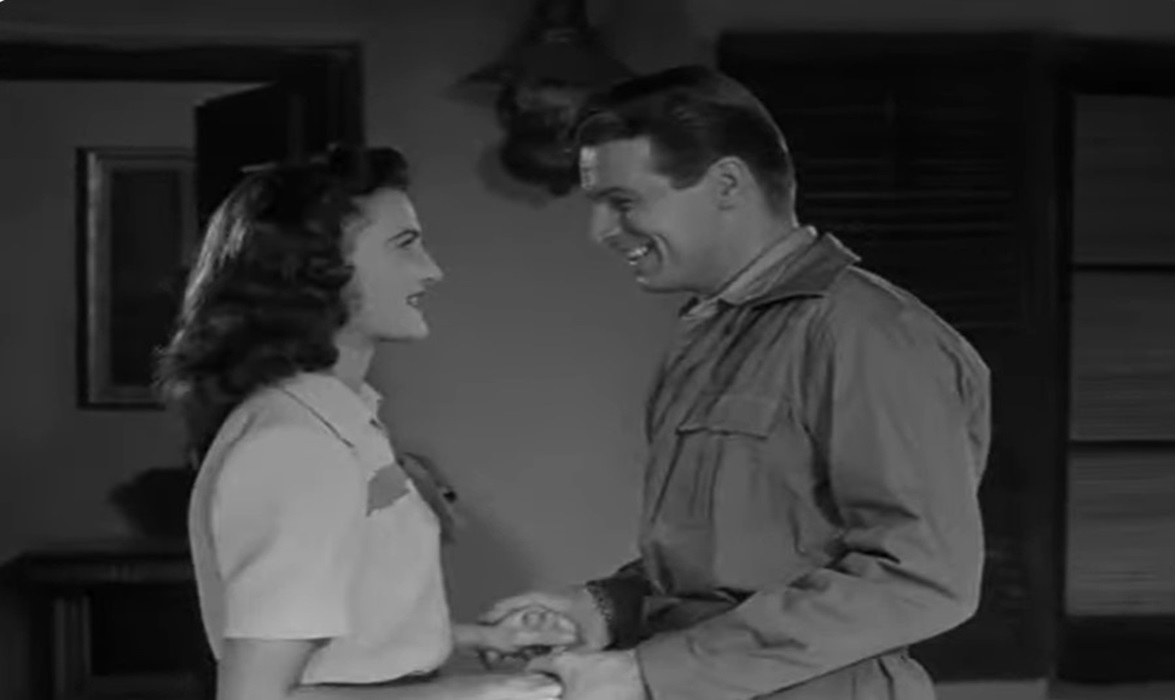
Meanwhile, American settler Roy Hendrix (theater actor Charles Gordon) has just driven into the village, on his way to visit his fiancée, Julie Vance (Peggy Stewart, who would later appear in Terror in the Wax Museum, Beyond Evil, and The Boogens). Julie too has just returned to the village, having spent the last couple months assisting at a children’s hospital in South Africa alongside her father, Thomas (Emmett Vogan, who with over 500 credits to his name is considered to be one of the most prolific film actors of all time). Father Gilchrist pays the elder Vance a visit, informing him of the series of recent mysterious deaths/murders plaguing the village and surrounding tribal lands. He states that the natives are abandoning the Christian beliefs that Gilchrist and the other missionaries are trying to “teach” them and are instead returning to their ancient voodoo magic beliefs.
Roy seconds this notion, stating that many of the natives are now refusing to work the mines that lie scattered throughout the surrounding jungle, believing an evil force to be at hand. As each of the victims has been found with punctures on their neck and their bodies drained of blood, rumors that a vampire is at large naturally begin to circulate.
Roy seeks out the consul of Webb Fallon, a relative newcomer to the village. Fallon is portrayed by English actor John Abbott, who appeared in films such as Gigi, Madame Bovary, and Jane Eyre, but may be better known by a certain generation for memorable guest roles on “The Munsters”, “Bewitched”, and “The Beverley Hillbillies”, as well as in the 1973 Meredith Baxter-starring TV movie, The Cat Creature. Despite having arrived only months prior, Fallon is now the owner of the village’s popular “dive” bar and has become something of an expert on the natives’ myths and superstitions.
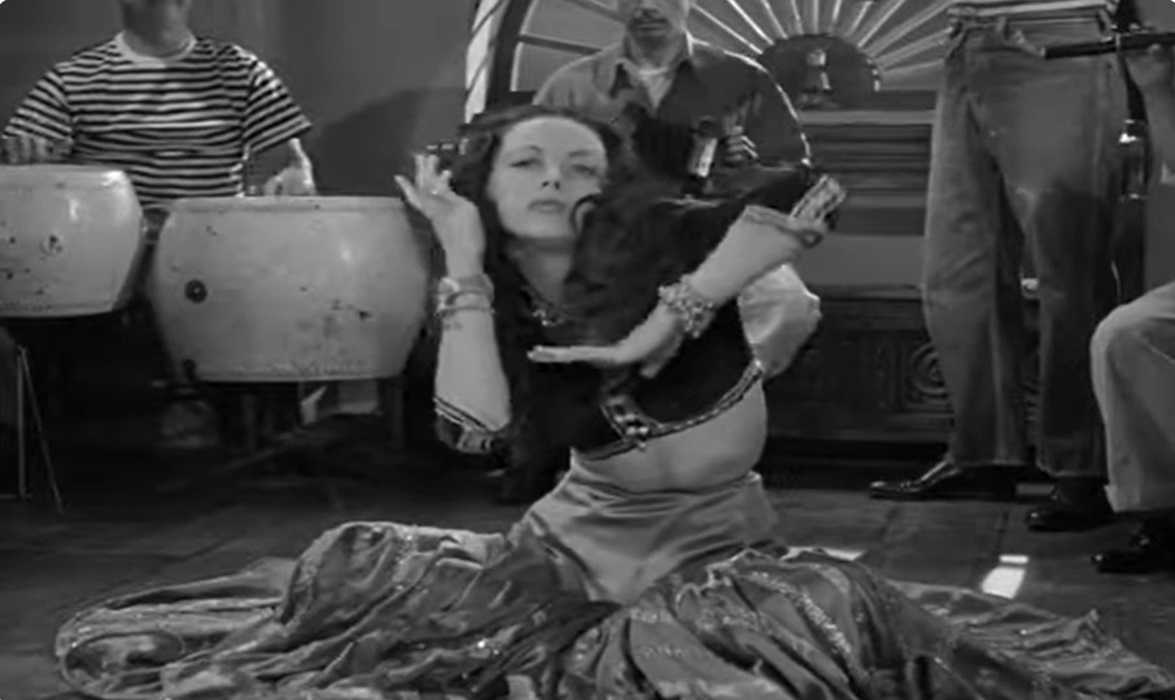
The action then shifts to Fallon’s bar, where we are greeted by the sight of a somewhat ritualistic dance routine performed by a sultry and super-flexible dancer named Lisa, played by actress Adele Mara. Mara would later appear in The Catman of Paris (told you it would be mentioned often), as well as 1958’s Curse of the Faceless Man, but is probably best known by many cinephiles for co-starring alongside John Wayne in both 1948’s Wake of the Red Witch and 1949’s Sands of Iwo Jima. Now, while I readily admit to not being very knowledgeable about dance moves of the era (or ANY era, for that matter), the dance that Mara performs in the film is honestly kind of spastic in appearance.
When we first meet Fallon, he has just taken surly boat captain Barrett (Roy Barcroft, who would later appear in Radar Men from the Moon, Destination Inner Space, Billy the Kid Versus Dracula, and countless TV shows) for all of his hard-earned cash, as well as the deed to his vessel, in a game of craps. Barrett believes himself to have been bamboozled by Fallon, and he and his two crewmen attempt to fight the bar owner. Although Roy does get knocked around a bit in the scuffle, the fight doesn’t last very long as Fallon mops the floor with these gentlemen. This outcome may not seem as odd if it weren’t for the fact that Fallon is a thin, gangly man who looks like someone spliced the genes of Bing Crosby and Don Knotts.
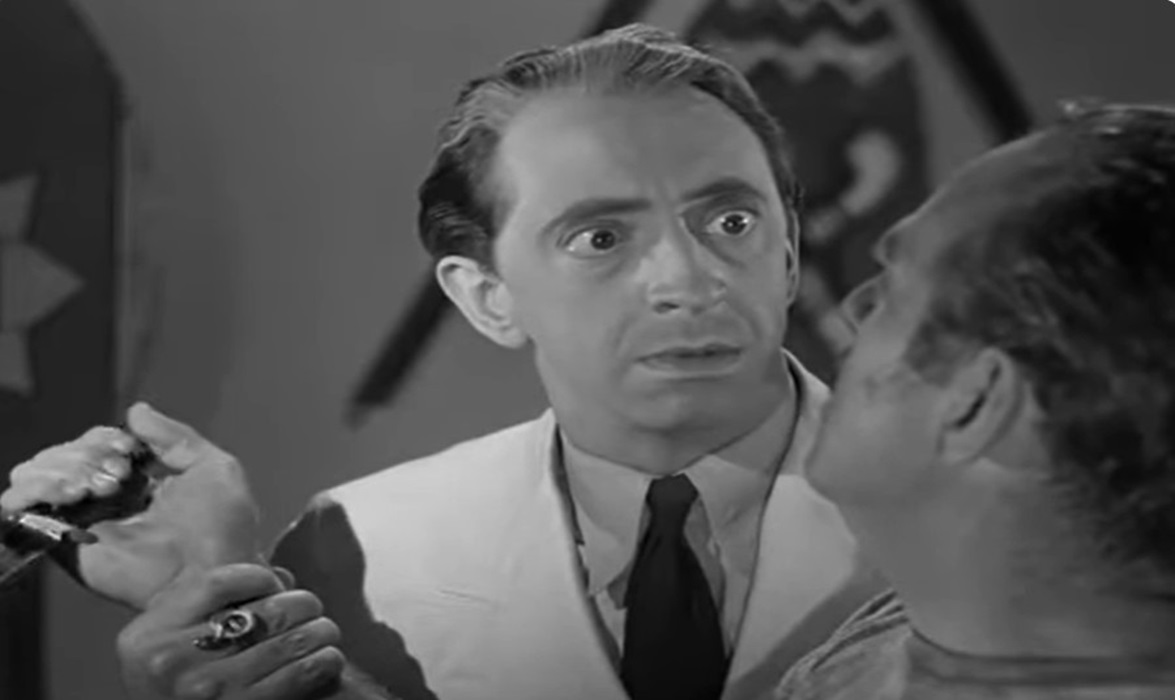
It’s only mere moments later that Fallon is revealed as none other than the vampire that has been terrorizing the area. Granted, this isn’t exactly a secret or a surprise. Hell, you can hear the vampire’s voice during the opening monolog, so you really should have been able to connect the dots once you hear Fallon speak. That said, nearly all of the film’s supporting characters are blissfully ignorant of Fallon’s true nature, somehow missing or overlooking the multiple hints displayed by the man’s frequently bizarre actions and behavior. I say “nearly all” as the native Africans, some of whom are now servants for Roy and the Vance’s, seem much keener to the signs that Fallon exhibits.
The Vampire’s Ghost does alter some of what we commonly consider to be staples of vampire lore. For example, Fallon is able to walk around freely in broad daylight, although he does use sunglasses due to extreme light sensitivity. It’s also very much worth noting that while staking through the heart is still the recommended method of exterminating a vampire (at least partially), the natives of The Vampire’s Ghost recommend the use of a silver-tipped spear as opposed to the “plain old” wooden stake. As disclosed later in the film, fire also seems to do the trick, but I don’t think that’s exactly a new or untried method.
After sustaining a serious injury, a weakened Fallon reveals his true nature to Roy, mesmerizing the man so that he cannot speak a word of this terrible secret. Believing the man to have died from his wounds, Roy leaves Fallon’s body in the jungle and returns home to his fiancée, only to find the now fully recovered vampire keeping the young woman company in her father’s home. Unable to warn Julie (or anyone else, for that matter) and bedridden with a mysterious fever (presumably also caused by the vampire’s hold over him), Roy is left powerless. This presents Fallon with an opportunity to charm the lovely Julie, as well as thin out some of the supporting cast.
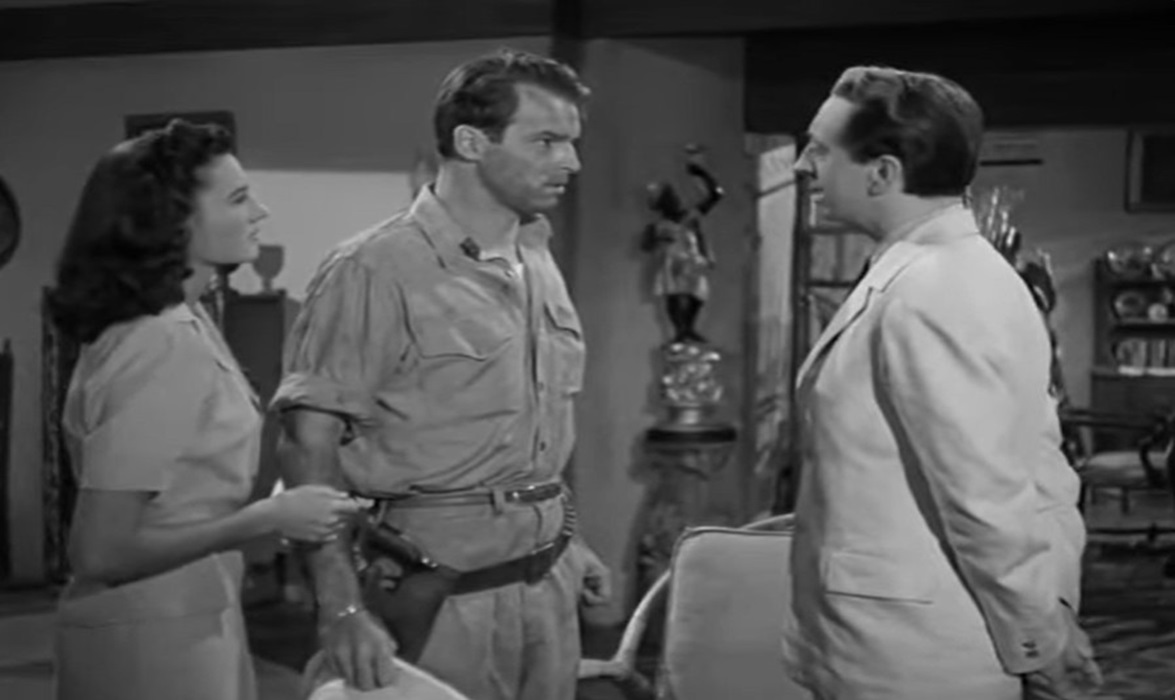
Clearly the only intelligent characters in the film (except for perhaps the centuries-old vampire), the Africans prepare to take down Fallon themselves. Fearing for the man’s safety, Thomas decides that Fallon must leave the village. Already wooed by his “Mr. Nice Guy” facade, Julie rebels at the notion that this “poor soul” should be jettisoned from his home over some “silly little nonsense” (her words, not mine) like mass murder. She also chides Roy for not speaking a word to defend the “friend that stayed with him while he was ill.”
Eventually, Father Gilchrist helps Roy to overcome his affliction with the power of Christ. The man has the word “Christ” in his name, for Christ’s sake, so it’s probably a safe bet that he’s good at his job. This angle alone may make the film feel even more dated to modern audiences as the aspect of religion “saving the day” just isn’t very fashionable these days. Granted, stating this only provokes another altogether different conversation on the significance of religion in modern society, but I’m not even remotely educated enough about the subject to consider broaching it in this forum.
With Roy now cured of his affliction, he, Gilchrist, and some of the natives set out to take down Fallon and to free Julie from his clutches before she too becomes one of the undead. As this is a significantly older horror film, you can naturally assume that the side of “good” wins. Well, of course it does. As also seems to be the case with many classic horror films of the era, the final confrontation with the face of evil is over quite quickly and with little in the form of real resistance. The film ends immediately afterwards with no wrap-up, epilogue, or final surprises. The forces of good have prevailed over evil and everyone lives happily ever after. Well, everyone except the vampire and those that he has already claimed. They are all quite dead, happily or not.
Truth be told, The Vampire’s Ghost doesn’t feature an overly deep or ingenious plot. There’s a vampire on the loose. It claims a few lives (and, in this case, possesses at least one person’s mind), which provokes the surviving characters to track it down and exterminate it. Really, that’s the plot for the majority of vampire films if you strip away all the excess storylines and boil them down to their basics, and “basic” is a perfect word for The Vampire’s Ghost. It’s a fairly no-frills event. There is little in the line of special effects, nor does the film make much effort to rely on the use of them. The tale is very much driven by its characters and not its events. That said, outside of Fallon, the majority of the characters (at least, all the white ones) are fairly drab and undefined, feeling more like generic placeholders. While the film doesn’t actually suffer much from its lack of defined personalities, the absence of such may help prevent the audience from ever truly being able to care much for the film’s human characters or their well-being and safety.
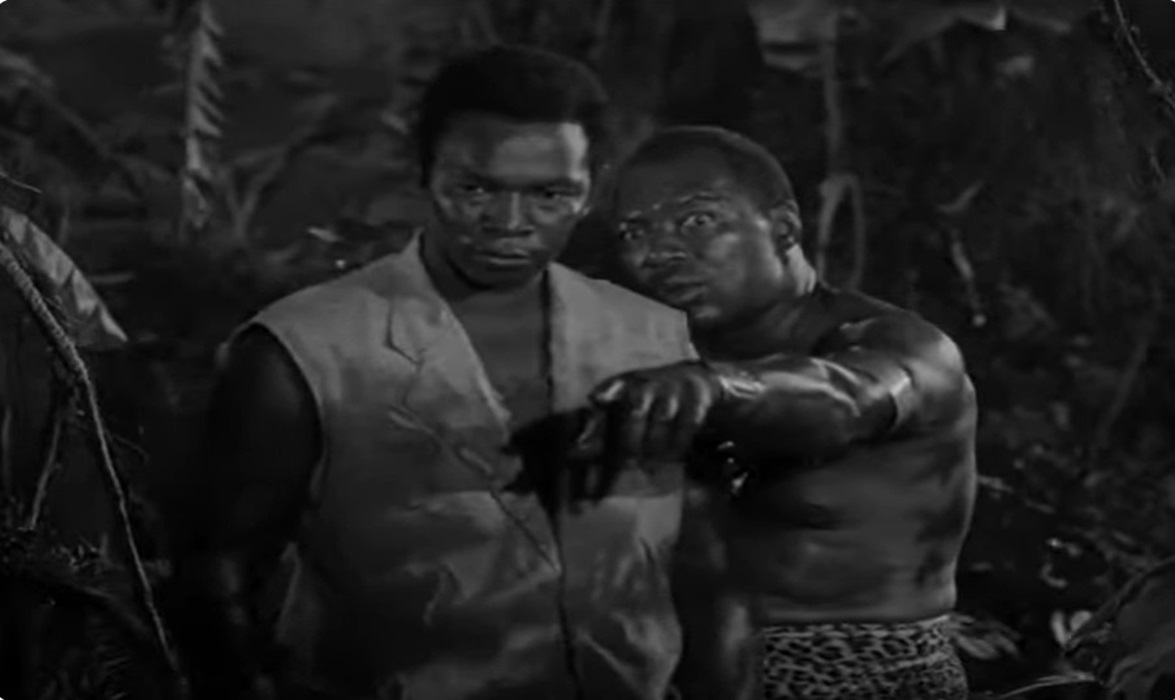
If there is one aspect of The Vampire’s Ghost which might draw some ire, it’s the not-so-overly flattering representation of its Black characters. As this is a film from a pre-Civil Rights Movement era, these characters are generally presented as superstitious primitives or, in “best” cases, servants. That said, as opposed to something like 1941’s King of the Zombies, these characters aren’t here to provide racially geared “comedic relief” or to stand around like mindless-zombies. In fact, the Black characters of The Vampire’s Ghost are far more clued in and receptive to what is happening around them than their White counterparts. In this regard, I do feel that The Vampire’s Ghost, whether intentional or not, does treat these characters with at least a little more respect and consideration than what is often found in comparable films of the era. Then again, as a white dude (albeit with Hispanic lineage) my views and opinions on the subject of racism are naturally going to be quite different from those of someone who has experienced it firsthand.
While The Vampire’s Ghost may not exactly be a “classic of horror cinema”, it’s still a decent way to kill an hour. It may not hold a candle to some of the premiere vampire films of the time (namely Universal’s Dracula films), but provides enough entertainment to keep one from being bored on a rainy weekend or an uneventful late night. While there’s nothing much here that will surprise or shock the modern horror fan, the performances are quite respectable, even if dialog and mentalities do seem quite antiquated and archaic by today’s standards. If nothing else, the film presents a vampire story set outside the confines of England and/or Europe, and features no aging castles or fog-covered moors. This approach in itself sets The Vampire’s Ghost apart from many of its contemporaries, often making the film feel closer to White Zombie than Dracula. On a personal level, I just found amusement in the fact that I share the same last name as the film’s antagonist. While I’ve definitely been accused of draining people’s will to live, I don’t recall ever drinking anyone’s blood in my lifetime. Then again, most of my 20’s are a blur.
The Vampire’s Ghost was released to Blu-ray disc in 2017 (on Halloween, of all days) by Olive Films. As Olive Films ceased operation in 2023, the release is now out of print, but still can be obtained from retailers for $20 or less. The film is also available to watch in its entirety on YouTube, albeit not in high definition.
 Horror And Sons
I first saw this on Netflix many years ago, when their streaming catalog still had a number of “moldy oldies” that were no doubt cheap to license (or in the public domain). A while later I acquired a fairly decent DVD copy from Sinister Cinema, but somehow I missed the news that Olive Films came out with a Blu-ray version.
It’s a unique film, with its unusual setting and twists on vampire lore. And it really flips the script from B movies of the time by portraying the native Africans as far more perceptive and proactive than the sluggish colonists. BTW, got a good chuckle out of your description of Fallon: “a thin, gangly man who looks like someone spliced the genes of Bing Crosby and Don Knotts.”
Great review of an obscure film that should get more attention!
LikeLiked by 1 person