

Play Dead is an early 1980s’ “killer dog” film from director Peter Wittman, whose only other directorial effort was 1984’s Ellie, starring Shelley Winters and Edward Albert. Although shot in 1981, Play Dead was shelved for a few years, finally seeing release on home video somewhere around 1985/86. It’s possible that the film saw either home video or theatrical release in other territories prior to this date, but I was not able to retrieve any evidence to verify this. As is usually the case, I also didn’t really try all that hard to locate any either.
Also known as “Killer Dog” or “Satan’s Dog” in some regions, the film saw a VHS release from Academy Home Entertainment before eventually being picked up for distribution by Troma Entertainment. In fact, I myself only first discovered the film approximately 15 years ago, as part of the “Toxie’s Blood Bank”* 10-movie DVD set. It’s presumable that many more viewers have since discovered the film thanks to its being released on Blu-ray, courtesy of Vinegar Syndrome, back in 2019.
*Previous reviews from this box set include 1988’s Death By Dialogue and the horror anthology Chillers

Yvonne De Carlo (forever known as “Lily Munster”) stars as “Hester”, a wealthy older woman carrying a years long grudge after the man she loved decided to marry another woman: her sister. However, that man has since long passed. As the film opens, the sister has also passed, with Hester arriving at a parlor for the woman’s funeral. In attendance are her sister’s two adult children, Hester’s niece and nephew. Also present is the niece’s fiancée, Jeff; a fairly thin and somewhat over-groomed fellow who looks like he took Lank Thompson’s video courses on being “handsome”.
To be fair, a couple negative comments are made before Hester has even spoken a word. Don’t feel too badly for Hester though, for she has already planned her retribution. Then again, it would seem as though she’s planned something for quite some time. So, semantics be damned!
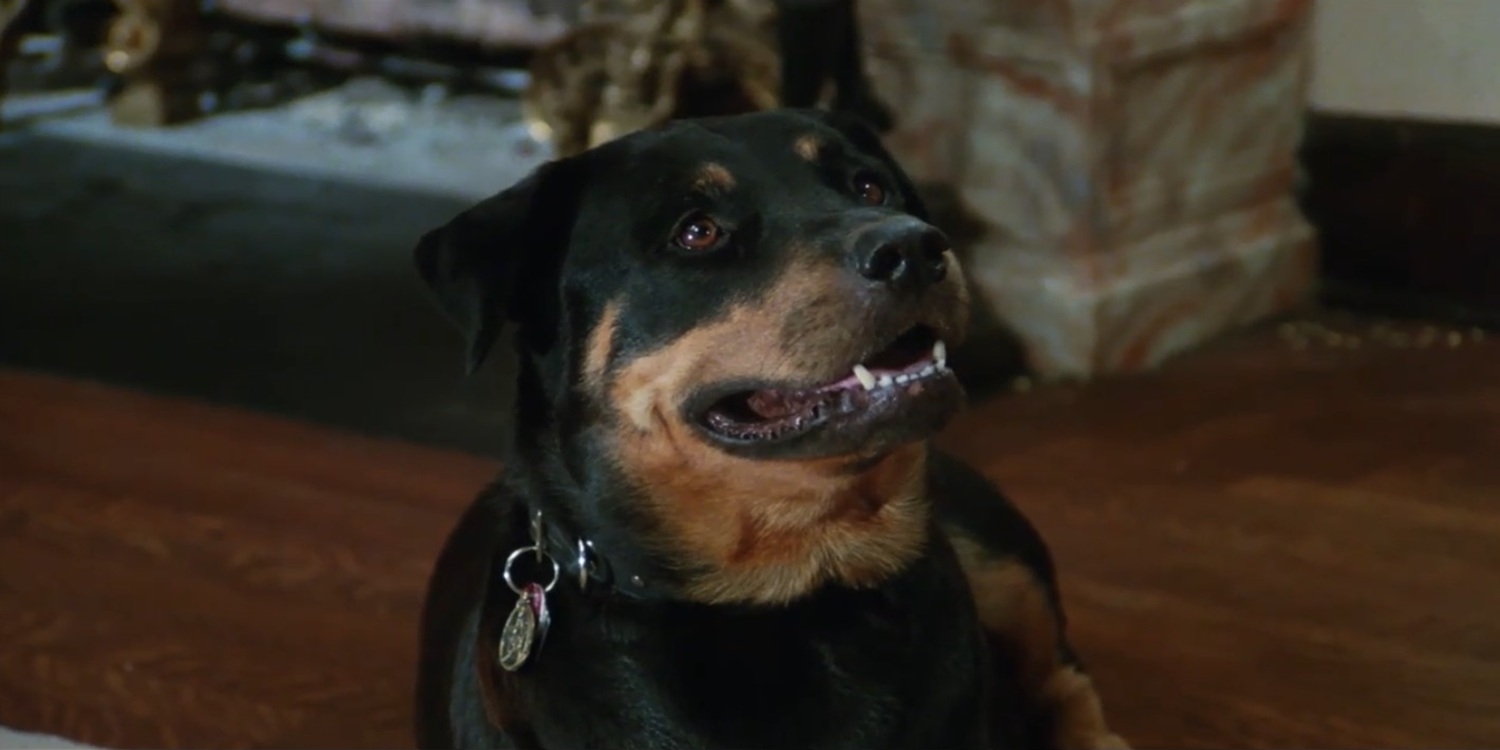
Whatever the extent of this family drama, Hester’s nephew, Stephen, has not forgotten the fact that this old bitch is “family”. More importantly, this old bitch is “family with money”, and he soon pays his aunt a friendly visit in an attempt to woo his way into the financial end of her “good graces”. Meanwhile, Hester pays a visit of her own to her niece, Audrey (Stephanie Dunnam – Silent Rage, TV’s “Dynasty”), presenting the younger woman with a somewhat random gift: her 200-lb Rottweiler, Greta. Greta is played by herself.
Audrey sees nothing whatsoever bizarre about the situation and accepts the dog into her home with open arms. However, there is indeed something very strange a-paw! Err, afoot! Hester uses the powers of black magic to secretly manipulate Greta, spelling doom for the siblings and those near them. Despite being the “plot synopsis” provided for the film on home media packaging, streaming outlets, and even IMDb, the witchcraft aspect is somewhat implied initially as no real ritual or incantation is shown until later in the film.
Soon after, a seemingly innocuous encounter with Greta leads to Stephen’s “accidental” death. As we aren’t even thirty minutes into the film’s 86-minute runtime, this particular death is not what I would call a “spoiler”, instead serving as the central plot point for the remainder of the film. Besides, the film is forty years old! You’ve had time to watch it by now.

Burris (Glenn Kezer, who also appeared in 1973’s The Werewolf of Washington), an aging detective investigating Stephen’s death, begins to suspect Audrey of having been involved, even questioning Hester about the matter. Hester feigns being appalled at the notion, secretly rejoicing that her plans of ruin are proceeding as planned. Granted, these plans also involve having Greta causing death of at least one completely random character with no involvement whatsoever in Hester’s ages old resentment towards her family. No, really. The character appears, gets killed, and other characters explain who they were later.
A few more doggo-related “accidents” occur, one of which would’ve had substantially more dramatic effect had we not been shown glimpses of it prior. The only real “surprise” is the length of the leash used as an implement of death, which seems long enough to walk your dog from space. Play Dead‘s true moment of greatness comes near the film’s conclusion when the viewer is asked to believe that Greta is capable of retrieving a canister of drain cleaner from a kitchen cabinet, mixing up a literal “chemical cocktail” for an unsuspecting victim, and returning the canister to its original location… all without spilling a drop! I know she’s a “good girl”, but that’s a lot of disbelief.

Play Dead concludes relatively free of any real conflict. Despite Greta being present at the scene of every death, no one ever seems to suspect Hester of any involvement until it is far too late to do anything about it. While the film does offer a couple unintended laughs, it also offers little in the way of suspense, thrills, or action. Although essentially secondary characters, the two detectives do provide a measure of comic relief, and may be the most developed of Play Dead‘s limited roster of characters. This also makes them the most interesting. That is, other than Greta, who gets in a little comeuppance of her own at film’s end.
All in all, I just can’t find much positive to say about Play Dead. The plot is pretty basic to begin with, and not much is added to help flesh out the story. It often feels like the characters, as well as the audience, are waiting for something to happen. Making this matter worse, performances are fairly weak across the board. De Carlo often looks bored with her role, but her performance is a “masterclass” compared to Dunnam, who struggles mightily here to find anything resembling dismay or grief.
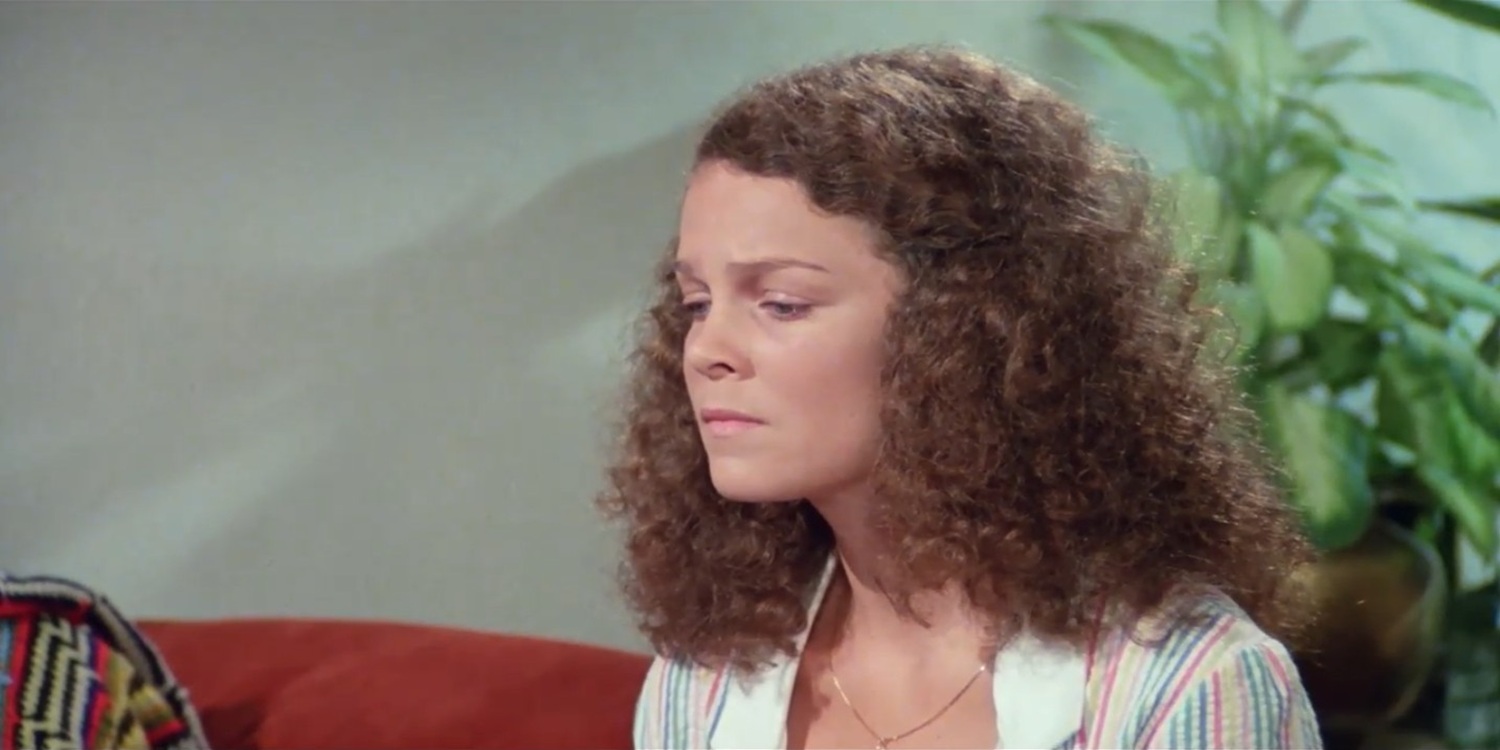
It’s worth mentioning that the film also features an overly extended sequence of Audrey and Jeff slowly undressing each other while the smoothest of late-70s era department store Muzak plays over the scene. Were it not for the nudity present in this sequence, one might believe that Play Dead was a made-for-television feature. Personally, I found the entire sequence to be very awkward and more than a little jarring, feeling entirely out of place with the rest of the film. As this is a horror movie produced during the 1980s, I’ll assume there was some thought that the film was obligated to have at least one scene of gratuitous nudity, if only to help garner that much coveted “R” rating. Normally, I won’t fault the filmmakers for this rational.
As of this writing, Play Dead is available to watch free on Tubi, Plex, and Fawesome. Honestly, do yourself a favor and just go watch (1978’s) Devil Dog: The Hound of Hell instead.
 Horror And Sons