
Throughout the years, I have frequently referred to the Halloween Horrors series as a “community event”. Even if I have limited the number of contributors to 31 (a goal we have yet to meet), I do believe that this series not only allows others a chance to share their thoughts and opinions on these varied films and on the Halloween season itself, but also allows those that regularly read the site some thoughts and opinions other than my own. You can get that the other 11 months of the year. Of course, as more than a few of our regular contributors have their own websites, podcast, Facebook pages, etc., there’s also the hope that you’ll take the time to check out these other fine outlets as well, if you haven’t done so already.
This said, today’s contributor has done a fine job of creating a few film fan “communities” of their own. That contributor is Bill Van Ryn, curator of Groovy Doom (on Facebook and Instagram) and creator, designer, and editor of the Drive-In Asylum fanzine, as well as the Halloween themed, Haunt (both available at www.etsy.com/shop/groovydoom). However, if you’ve read this series in previous years, you probably know all this already as Bill has been a contributor to the Halloween Horrors series for some time now. In recent years, Bill has also started the Drive-In Asylum Double Features, where he and earlier contributor Sam Panico host weekly watch parties for cult classic films (mostly) each Saturday starting at 8pm EST.
In addition to having featured quite a few of this year’s contributors as guest hosts, there’s also a chat feature where those same contributors tend to congregate with an ever-growing group of friendly, knowledgeable, and humorous like-minded “fans of fantastic films”. (I stole that saying from Bill.) In fact, there’s a episode planned for THIS Saturday, when our hosts will be featuring only one film, 1976’s “Crypt of Dark Secrets”. The show starts at 11pm EST and is available on the Groovy Doom Facebook page and on the Groovy Doom Youtube channel. I hope to see you there!
Well, now that I’m doing whoring, let’s talk a little more about cannibalism, shall we?
“FRIGHTMARE” – AN AMATEUR ANALYSIS OF A CANNIBALISTICALLY DYSFUNCTIONAL FAMILY
by Bill Van Ryn
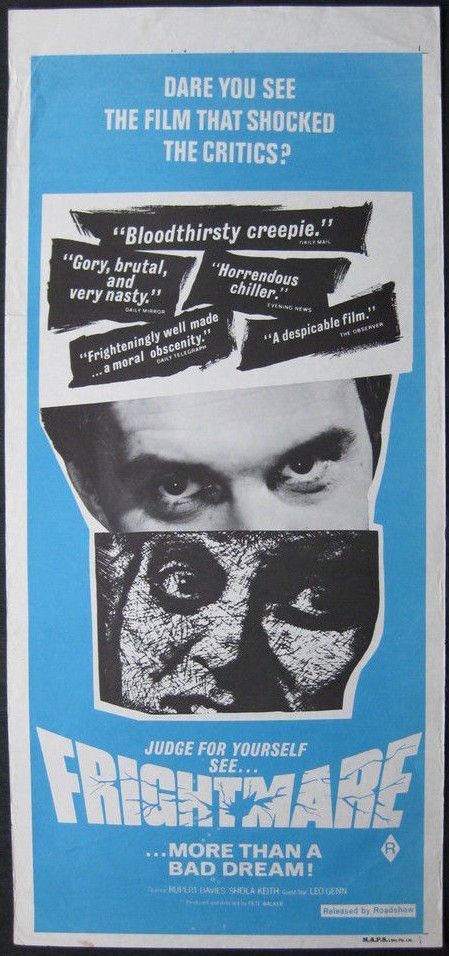 There is no horror like the kind that results from a dysfunctional family. Double that horror if the central problem in your family is homicide, and triple it if it involves eating the victims. Although “Texas Chain Saw Massacre” was not the first film to depict cannibalism as a family value, it could be thought of as the first movie to do it in such a…memorably gruesome way. But one other 1974 movie dared to take a similar approach: Pete Walker’s “Frightmare“.
Cannibal family films “Spider Baby” and “The Folks at Red Wolf Inn” had come before, but “Chain Saw” and “Frightmare” represented a desire to tell these stories in an increasingly violent way, with the shock value cranked way up. It’s hard to say who “got there” first in 1974, since they debuted almost simultaneously. The American-made “Chain Saw” was released in October, where the British “Frightmare” was released in the UK in November of that same year.
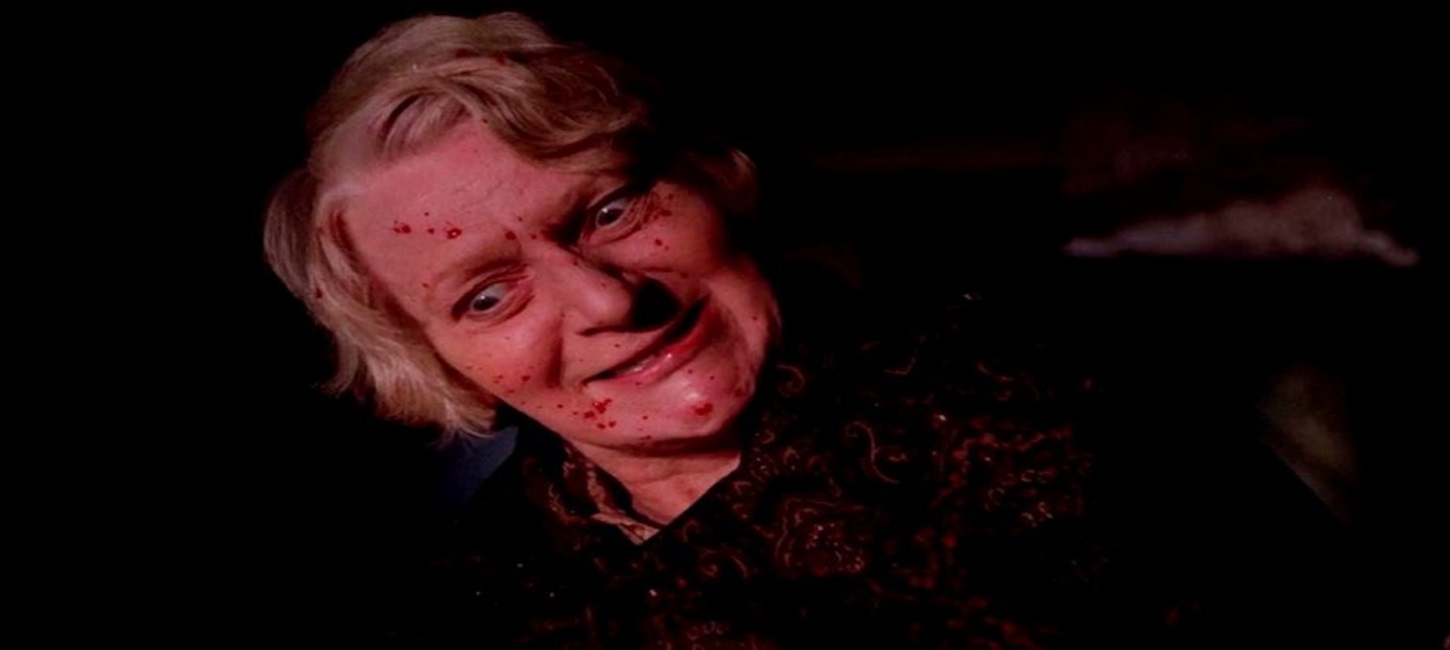
Both movies are effective in their own way, and even though only “Chain Saw” became so influential and iconic, I feel like “Frightmare” is actually the kind of movie that people thought they were getting when they went to see “TCM”. Tobe Hooper’s movie actually gives you very little blood and gore, which is part of its genius, but it does depict a series of brutal shocks. Walker’s film is brutal, too – people are murdered on screen with pitchforks, power drills and red hot pokers, and it doesn’t hold back on the gore, depicting eyeballs gouged out, flesh peeling from faces and exposed brain matter. These shocks play out amid the unfolding of a very British drama about a family in crisis. There’s no barbeque here, they serve cervelle de veau, love.
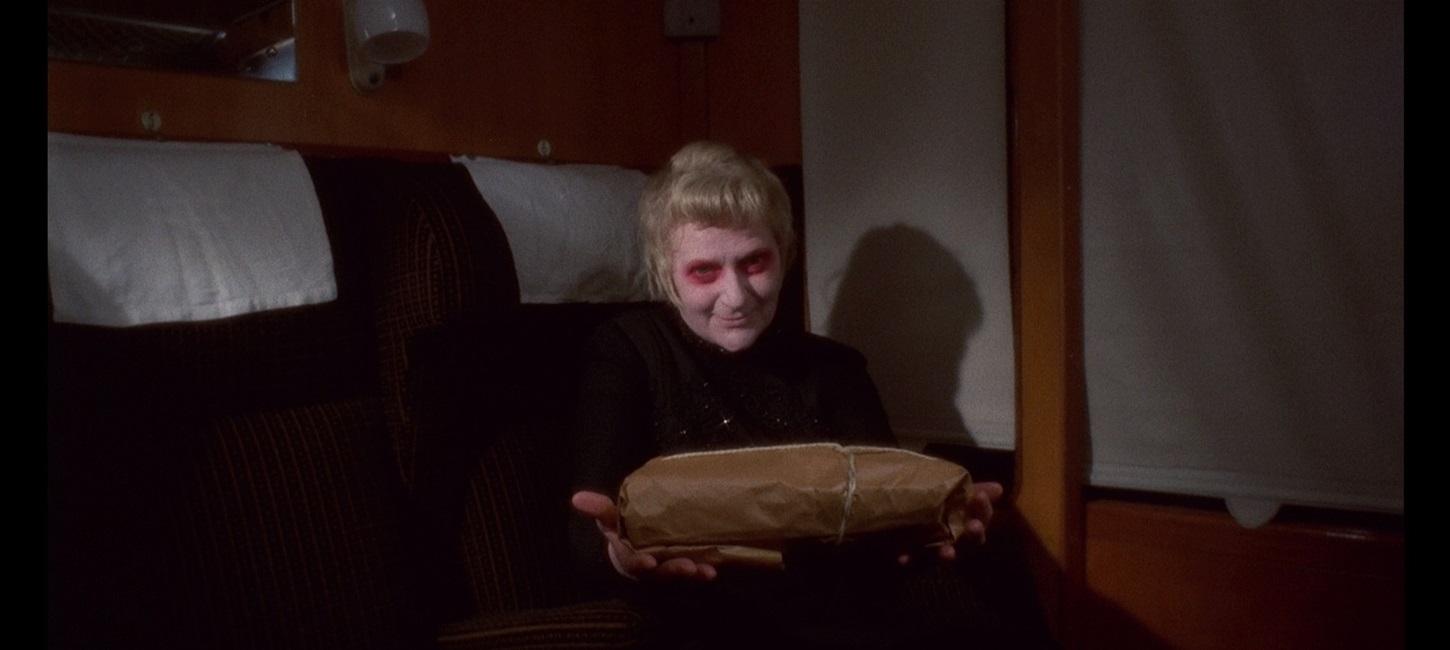
Unlike Hooper’s film, the cannibal family we meet in “Frightmare” is near the beginning of its hereditary obsession with people-eating. The root of their wrong is the mother, Dorothy (Sheila Keith). Naturally attracted to cannibalism due to a childhood trauma, her obsession manifests in adulthood as a full blown tendency to murder and eat people, using tarot card readings as the web for the unwary flies she attracts for consumption. Now, that’s bad enough, but every family monster needs an enabler, and this would be her husband, Edmund (Rupert Davies), who likes to make excuses for his wife’s aberrant behavior. He’s so devoted to her that when she is apprehended, he feigns the same mental illness so they are both committed to the same institution (apparently they have special accommodations for married couples). After 15 years, they are pronounced sane (again, simultaneously) and released, where they retire to a small farmhouse in the English countryside, and Dorothy immediately begins murdering and eating people again.
Edmund’s daughter from a previous marriage, Jackie (Deborah Fairfax), seems to be our protagonist. Now a young woman in her twenties, she has been temporarily caring for her younger half-sister, a rebellious 15 year old named Debbie (Kim Butcher), who was born just after the parents were committed. She’s been kicked out of the orphanage for her bad behavior, the film’s first red flag, but the family dysfunction helps turn her into a complete monster just like her mother. At her father’s insistence, Jackie has refused to tell Debbie anything about their parents, the undoubtable source of her resentment, and her inability to trust her older half-sister has given her no other avenue than to seek out their parents, and to identify with them. Jackie’s new love interest, a psychologist named Graham (Paul Greenwood), lays this all out for her, but he has no idea just how damaged Jackie is. In fact, she’s allowed her father to enlist her help in procuring brains from a local butcher and passing them off to Dorothy as if they could be human remains, which would mean Dorothy somehow believes Jackie is murdering for her. Being a conniving psychopath, of course Dorothy doesn’t fall for this, and she does a little murdering on her own.
In fact, Edmund’s inability to do one thing correctly is the most disturbing thing in the movie. He’s the ultimate spineless man dominated by a woman, or women in this case. Edmund has become so easily manipulated by his insane wife and, now, their equally insane daughter, that he’s willing to stand by and do nothing while they murder every person who knows their meat-eating secret, even if their hit list includes his oldest daughter. The father’s mishandling of the situation is what makes this everybody’s downfall, as he obtains Jackie’s complicity and makes her look like the bad guy. Going along with her father not only worsened her sister’s fate, but it results in Jackie’s own peril when Edmund turns on her. There’s always this child in a dysfunctional family, the one who tries to make everybody happy and then ends up being cast out.
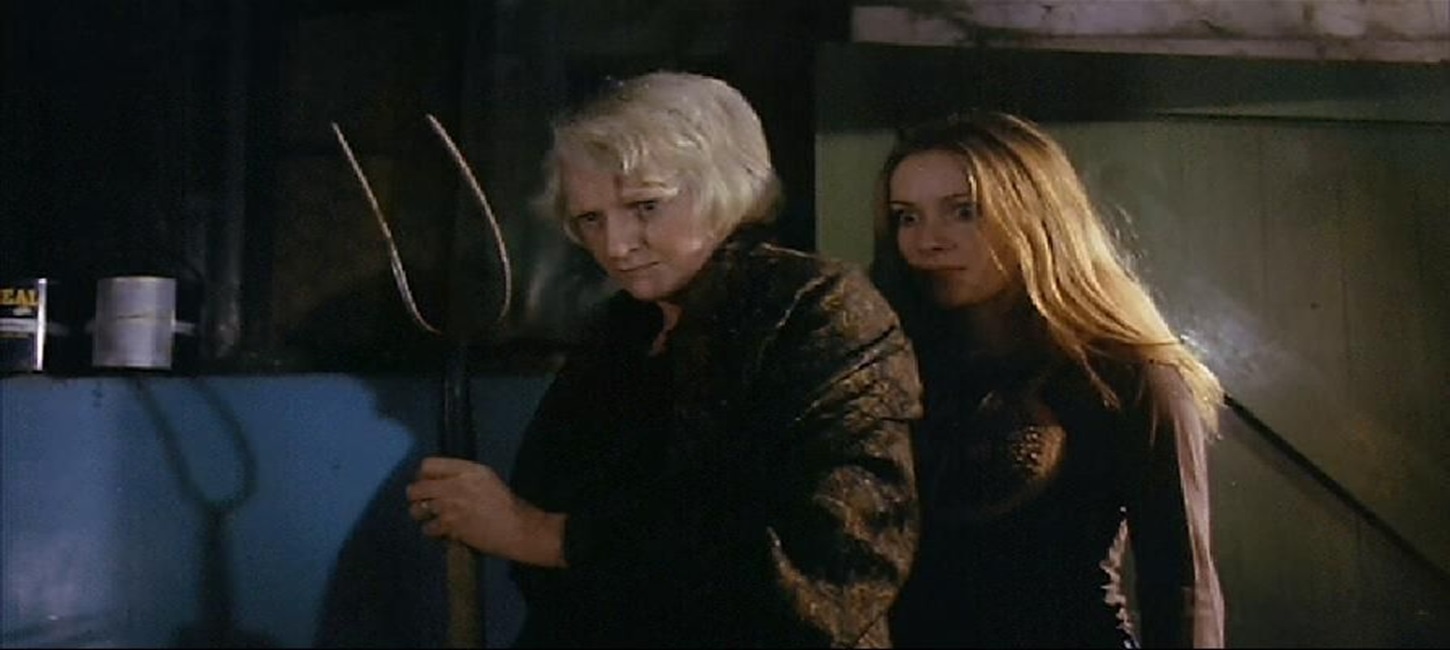
But if the father is to blame for the family’s downfall, we could take one more step backwards and ask how these criminals were ever deemed fit for society in the first place after committing such lurid and repulsive crimes. The judge who sentences Dorothy and Edmund in the beginning of the film admits he would have given them the death penalty, but was prevented from doing so by the declaration by doctors that the two of them were mentally unfit. The doctors saved them, the doctors studied them, then the doctors released them on an unwary public to commit more heinous crimes, proving that all of their so-called treatment had accomplished nothing. A British film critic called this movie “morally repellent”, and this could be one reason why.
Strangely, the filmmakers did not include a scene where we see Dorothy actually consuming anything, and a fear of the censor is the only explanation I can come up with as to why this was overlooked. Walker’s exploitation films frequently depicted older characters who couldn’t be trusted not to torture and/or murder the younger people around them, such as the villainous priest in “The Confessional” (aka “The House of Mortal Sin“) or the unhinged ‘warden’ and staff of an illegal prison in “House of Whipcord“. In these other movies, the villains are driven by a sense of superiority, but in “Frightmare“, it’s simply the desire to eat a good meal.
 Horror And Sons