
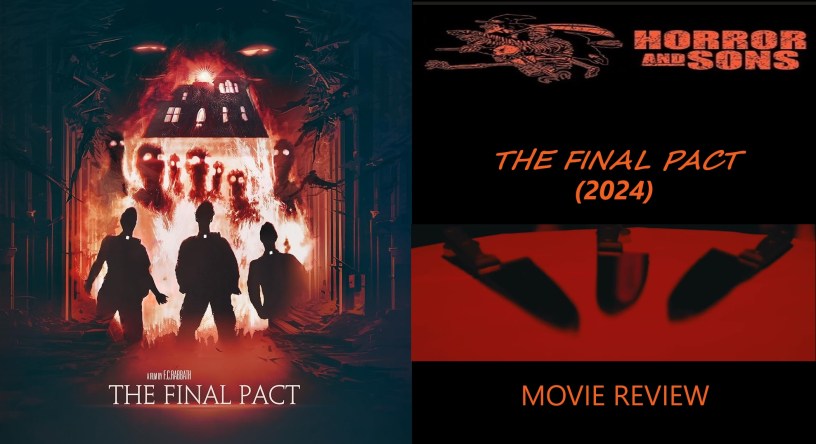
The Final Pact is the latest film from writer, director, and producer F.C. Rabbath. Rabbath’s films are no stranger to this website as I’ve reviewed two of his other titles, 2016’s Watch Over Us and 2018’s A Brilliant Monster, previously on this site. Both of those reviews are still available and can be accessed by clicking on the names of those films in this review. So, maybe check those out after reading this review. Fair warning, I was not overly kind to one of those films.
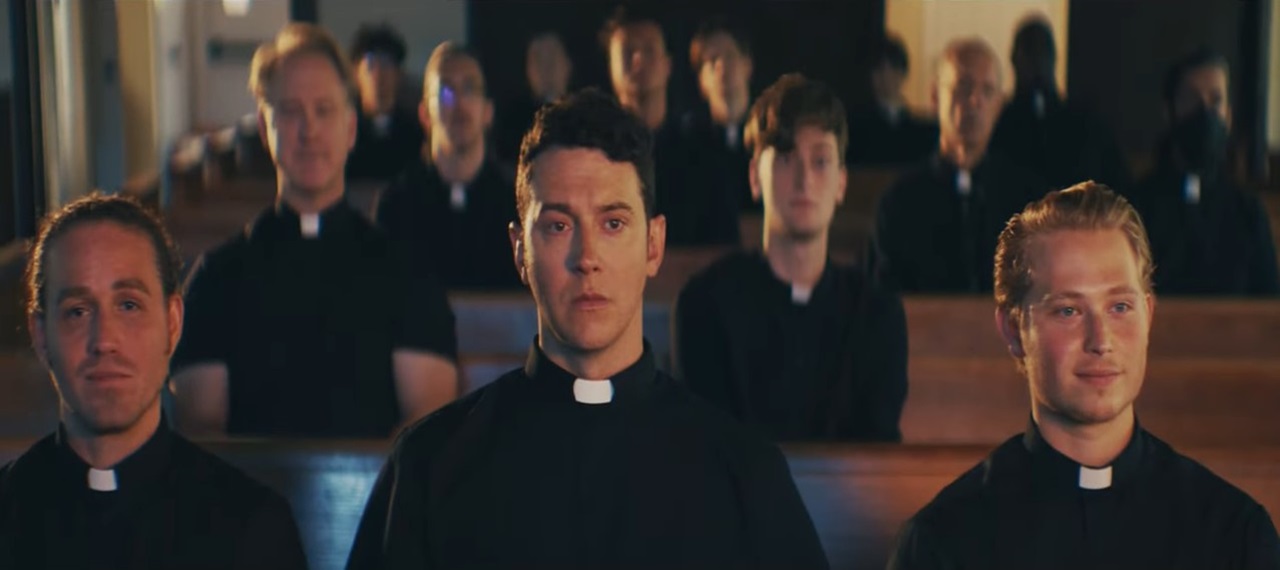
Rabbath’s latest film tells the tale of three young priests-in-training about to finish seminary. Although they have been warned that they must complete one final test before truly reaching priesthood, the three decide to celebrate the occasion anyway. While driving to a bar for just one beer, they encounter a distressed-looking woman stranded by the roadside. The woman begs for help not just with her car, but with her daughter, whom she believes to be possessed. Doubting any real case of demonic presence, the priests oblige the woman’s request, although not all three agree that it’s a wise decision.
Upon reaching the woman’s home, they are introduced to her teenaged/young adult (possibly older?) daughter, Lucy (Julia Vasi – Zombieland: Double Tap, 2021’s Fear of Rain). While Lucy does indeed possess a razor-sharp tongue and spiteful disposition, there is nothing that implies the girl has been possessed or is under any form of malevolent influence. Basically, Lucy’s just a bitch.
The priests leave the house and finally make their way to that bar, albeit (somewhat fitting) one at a restaurant. There, they encounter another priest-in-training who now appears disheveled and bewildered. This young man speaks of having also just met Lucy and her mother, and of having failed his final test by leaving the house. Fearing that they may have done the same, the priests return to the home only to face a Dante’s “Inferno”-like trial that will not only test the limits of their individual faith, but may also solve a few mysteries from one’s personal life.
The focal point of The Final Pact is Paul (Austin Freeman, who appeared as “Alex” on “The Walking Dead”), who despite becoming a priest has lost all faith due to a series of tragic and scarring (both emotionally and physically) events in his life. Meanwhile, the more carefree John (Charlie Prince, who appeared on the Netflix series “Bloodline”) strives to be the cool, hip priest, while Mark (Sam Sneary, who appeared on NBC’s “Found”) tends to be a bit more by-the-book, but also more uptight and nervous.
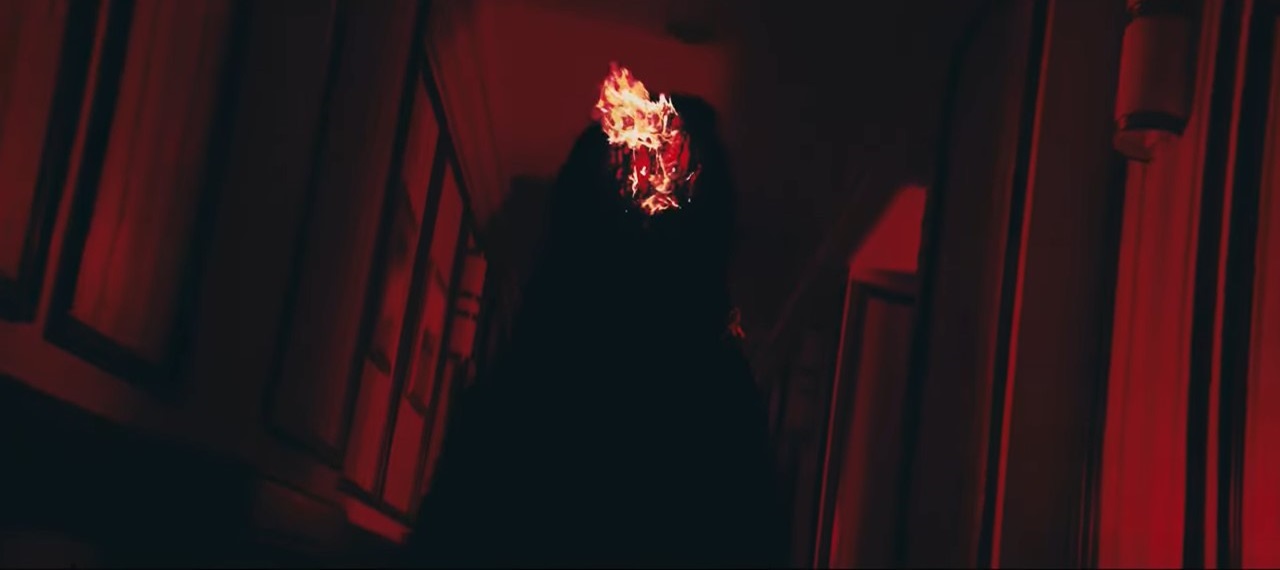
Both the weaknesses and strengths of all three men come into play as they progress through rooms of the house, each room tempting them with one of the Seven Deadly Sins. This includes lust, greed, gluttony, and so on. It’s here that The Final Pact unfortunately displays what I consider to be its only real weakness; a somewhat-rushed pacing that prevents the viewer from ever truly fearing that our protagonists are in any significant danger, both mortally and spiritually. Sure, expanding on the concepts and implications of each of these sins would probably increase the film’s runtime by a notable amount, but this is actually one of those rare cases where I do feel that a longer runtime may have helped the film.
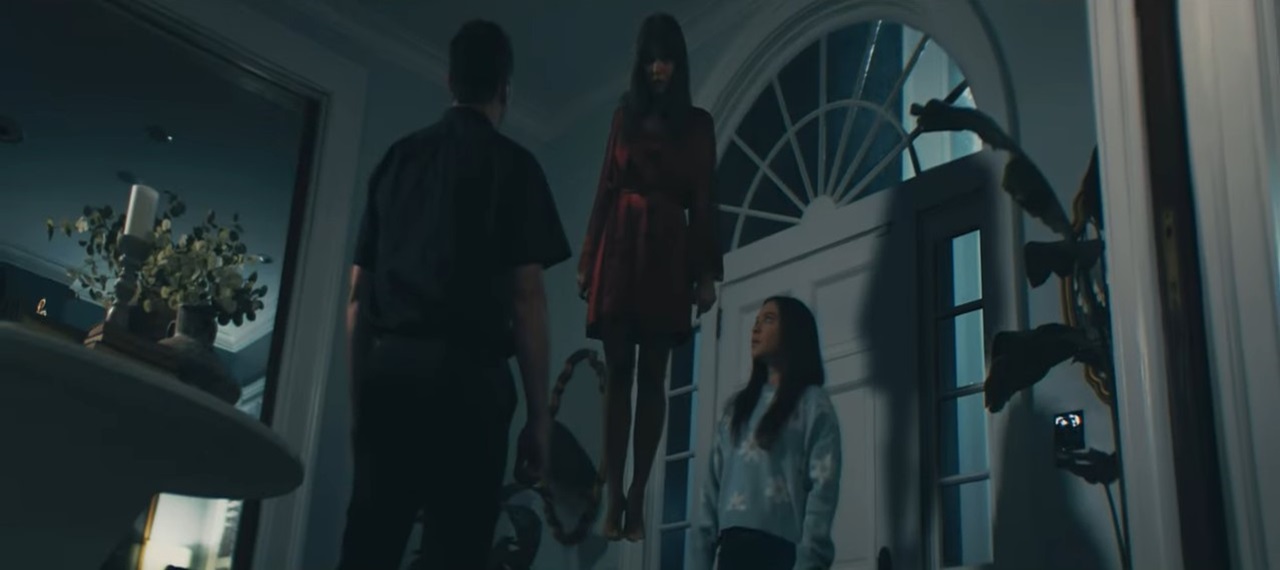
Performances are quite respectable from all of the cast, with Freeman doubt-filled “Paul” carrying the bulk of the film’s emotional weight, Prince and Sneary occasionally adding some mild, but well-landed comedic relief, and Vasi’s sardonic, yet charismatic “Lucy” frequently stealing the show. Quite notably, The Final Pact is generally quite light-hearted despite its heavily religious theming, and surprisingly never tries to push a specific belief system or dogma. That said, the religious aspects of the film will still undoubtedly be a turn-off to some viewers.
Although the film was produced on a very small budget, The Final Pact is really quite well made. The film is quite wonderfully shot, making terrific work of interiors, lighting, and camera angles. CGI is also kept to a minimum, which is a wise choice as the tale proves to not need it. There were multiple instances where Rabbath could have easily gone overboard with digital effects or superfluous story elements, but the filmmaker wisely shows restraint, keeping the tale more intimate and focused.
Again, The Final Pact may not appeal to some horror fans, thanks to its religious theming and lack of heavy horror elements. While the basis of the film’s plot may not be exactly original (“The Divine Comedy” is over 700 years old, after all), The Final Pact still manages to be both quite entertaining and a somewhat refreshingly unique horror experience, albeit one that does ultimately tend to play things quite safe in terms of violence or scares.
As of this writing, The Final Pact is making the film fest circuit and, as such, is currently unavailable to watch online. That said, the film should be available soon. So, if you wish to watch The Final Pact for yourself, I suggest following Rabbath’s Facebook page (Facebook.com/fcrabbathcreations) for more news and details.
 Horror And Sons