

Today’s Halloween Horrors post comes to us from the third contributor making their series debut. Please welcome George Seminara to this year’s event!
George has done a bit of everything, so I apologize if I forget anything. George is an acclaimed photographer, a director of hundreds of music and concert videos, writer for It Came From Hollywood and other publications, and has won both the Emmy and Peabody Award. He’s also co-starred in the films Splatter University and I Was A Teenage Zombie, which was featured earlier in this series. It’s also worth noting that George has worked with Willie Tyler and Lester which, depending on your point of view, is either the most fascinating of his achievements or the most frightening.
George can now add Halloween Horrors contributor to his list of accolades. I’m thrilled to welcome him to the series and present his look at the oldest film in this year’s line-up. I’m also quite curious about his work with Lester though. Seriously, the doll creeps me out.
Island of Lost Souls
“A Horror film just as horrifying behind the scenes as it is on the screen.“
by George Seminara
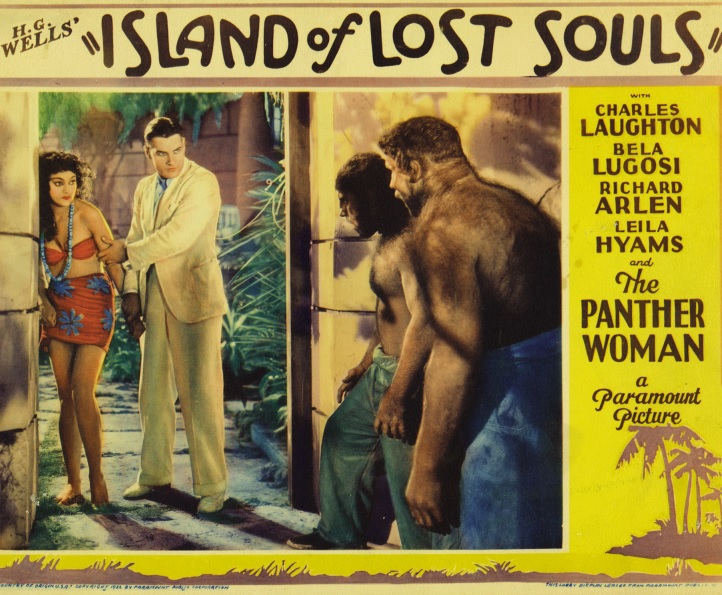
I like a crazy story, and boy, does this film have it! Island of Lost Souls is a 1932 science fiction/horror film directed by Erle C. Kenton. It was produced and distributed by Paramount Productions, who decided that after they went out of their way to license the 1896 best-seller “The Island of Doctor Moreau”, written by H.G. Wells, they needed to change the name. For his part, Wells failed to have the good taste to be dead or keep his opinions about the film to himself. “This whole motion picture is terrible! It is so ridiculously obvious that I proclaim it miserable!” However, Wells was an unapologetic fan of Charles Laughton, just not in this picture.
In the January 12, 1932 edition of that great arbiter of taste, The Brooklyn Daily Eagle began their review like this: “Island of Lost Souls, as currently presented on a Broadway curtain, is a crude combination of sex and horror film, probably combining the worst features of both.”
Ouch!
If that’s true, then what am I here for? Of course, I beg to differ. Island of Lost Souls is a film about a human monster pathologically consumed with a desire to tinker with Mother Nature’s bounties by taking animals and making them humans through all sorts of weird pseudo-scientific means. The process is not pleasant. When it’s time for a treatment, Dr. Moreau takes you to the House of Pain! (Pack it up, pack it in, let me begin.)
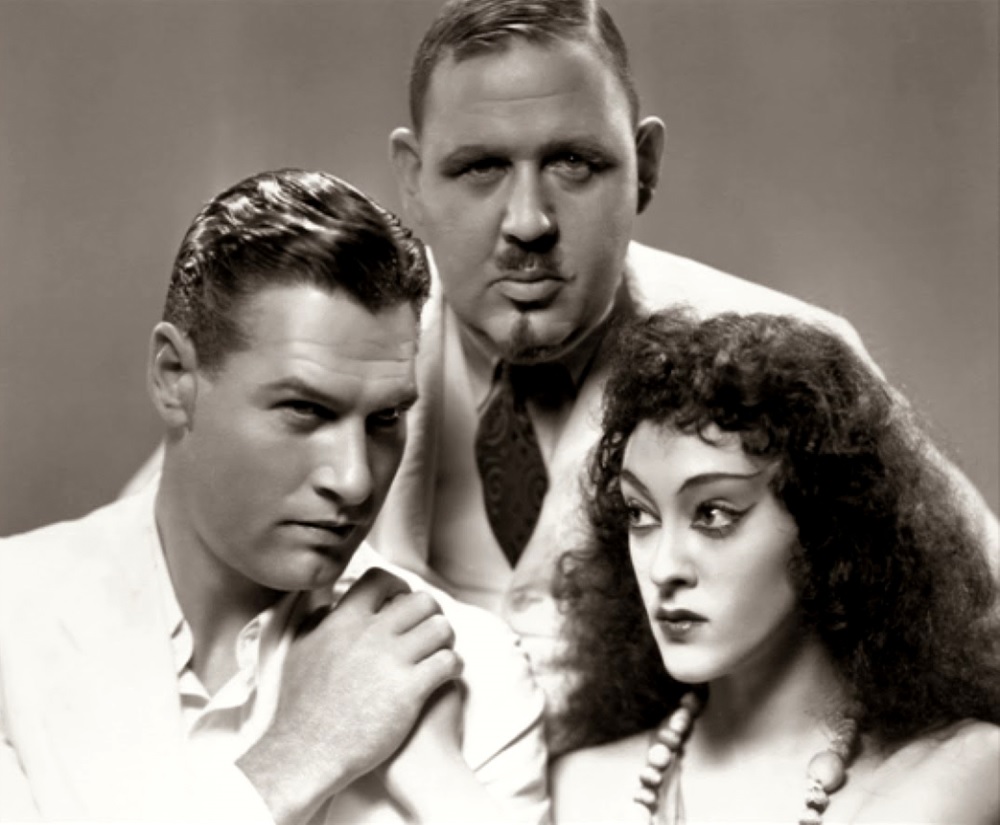
Let’s begin by discussing the horror of making this film. I will label this portion of the article as the “get a clue part.” Paramount’s 1931 smash hit Dr. Jekyll and Mr. Hyde had the good fortune of having its author, Robert Louis Stevenson, dying some forty years earlier on the Island of Samoa. (Don’t believe me, but somehow, when I’m done, this will all make sense.) He couldn’t bad-mouth the production. Paramount’s “Mr. Hyde”, was played with lascivious abandon by Frederic March, with stunning make-up created by Walter ‘Wally’ James Westmore. Wally was part of that famous sextet of eyeliner and blush-meisters, the Westmore’s of Hollywood. In age order, they are Monte, Perc, Ern, Wally, Bud, and Frank. There is a good chance if you acted in Hollywood between 1920 and yesterday, you had make-up smeared on by a Westmore. (Talk about nepo-babies!)
Mr. Hyde resembles a monstrous ape in a tuxedo and top hat who has an implied sexual relationship with a sex worker (that means “hooker”), Ivy, played by the very attractive “in that way” (wink, wink) Miriam Hopkins. (She should have been a much bigger star.) The studio felt that the alarm this relationship created amongst members of the press and clergy led to its success at the box office. Paramount wanted to make a follow-up with even more horrific and sexual themes. They cast their net wide and found a high-brow property with low-brow appeal, “The Island of Dr. Moreau”. Paramount spared no expense in getting the exact, perfect script they wanted. They were hiring and firing writers by the dozen. Only two names remained by the final draft dated September 30, 1932: Phillip Wylie and Waldemar Young. (Young, who wrote Lon Chaney’s lost masterwork, London After Midnight, and about a hundred other delicacies, came from behind to lose by a nose.)
That final draft, with the creation of a new (not in the book) character, the Panther Girl, was when things got weird. A studio press agent had the genius idea to run a contest to find a “star of tomorrow”, a new face. One that will change Hollywood. One who will be the Next Top – um, Panther girl? According to Arthur Mayer, the press agent in question, writing in his book, “Merely Colossal”, over 60,000 women sent in photos to the contest. Mostly women. (There were a few outliers that may not have been women.) Contestants were required to be between 17 and 30 years old! To be in good health! To stand between 5 feet 4 inches and 5 feet 8 inches tall (163 cm to 173 cm for our European friends) who do not work, or are related to anyone who works, at Paramount. Not only that, but they had to submit a written endorsement from two citizens of good standing from their community, guaranteeing the contestant’s morality. Hanging in the balance was a trip to Hollywood, a six-week contract at $200.00 a week, and an apartment in the world-famous Ambassador Hotel; the location of at least a half dozen Oscar presentations and countless peccadilloes.
This publicity stunt was genius. Cities across our great nation held individual contests to narrow down the search. Over three consecutive weekends, audiences would meet the 12 finalists. Participating newspapers chose the finalists, and theater audiences would vote via secret ballot until there was one. When the votes got counted, the winner, a potential Panther Girl, was selected to go to the regionals. And so on. Finally, four young ladies, Lona Andre, Gail Patrick, Kathleen Burke, and Verna Hillie, were chosen as moral ideals of feminine purity! They were to compete for the part in Hollywood, judged by a group of male Hollywood notables. (What could go wrong?)
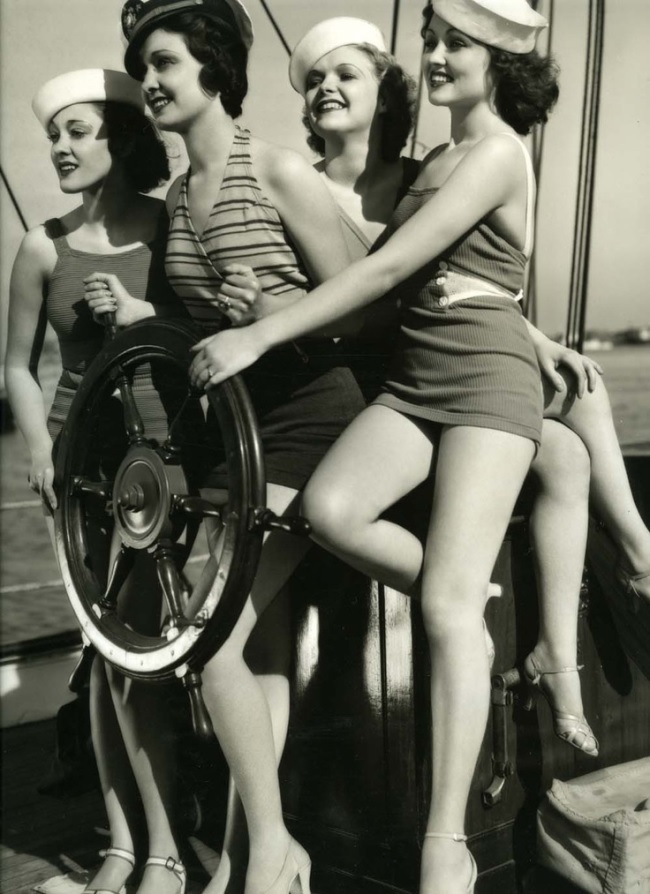
Did I mention that no one consulted the script? No one actually knew what the studio was looking for. The four ladies arrive in Hollywood and are then cleaned and dressed up as vital young starlets and photographed as nice, clean-cut, and very moral American girls; playing games, going out, and, of course, some beach shots in bathing suits (Pre-Bikini, keep your eyes on the words buster!), with the four of them on a sailboat with sailor hats, just looking like the sweetest bunch of gals. Completely different from the dark recesses of the author’s mind; the feral Panther Girl. They paraded across the stage for the gathered judges; Cecil B. DeMille, Rouben Mamoulian, Ernst Lubitsch, Norman Taurog, Stuart Walker, and Erle C. Kenton. Legends all.
These chaps were the best available to judge if these contestants could attain the sensual danger Paramount was looking for. (One of the gals submitted a letter from her minister!) They knew their stuff, alright. These guys would win Oscars and have stars on the Hollywood Walk of Fame. C.B. DeMille was already a legend. After some intense scrutiny, they discovered Lota, the Panther Girl! I do not know how it happened, nor what criteria were involved. Now, I want to state that I was once in 8th grade, and I anticipate that in those less sophisticated times, our judges behaved similarly as my boys and I did back in those heady and clueless days of eighth grade. Kathleen Burke won, and Norman Taurog (the future Oscar winner for Skippy) left the project in a huff (he was probably hoping for another contestant). He was immediately replaced by a true master of the B-Movie, Erle Kenton. Kenton started his career directing the Keystone Cops, but made a living churning out comedies and naughty mysteries. Island of Lost Souls would be his first horror film.
Twelve years after Island of the Lost Souls crashed into movie palaces, and while doing press for the House of Frankenstein, Kenton spoke about directing horror films, “They give us a chance to let our imagination run wild. The art department can go to town on creepy sets. Propmen have fun with cobwebs, and the cameraman has fun with trick lighting and shadows. The director has fun. We all have more fun making a horror picture than a comedy.” I believe it.
Speaking of camera-people who like to have fun, Karl Struss was part of the crew when Kenton arrived. Hot on the heels of his success with Dr. Jekyll and Mr. Hyde, Struss wanted to cook up an even spicier stew with Island of Lost Souls. Boy, did he! Struss won the Academy Award the first time he got nominated, for F.W. Murnau’s Sunrise. He would receive three more nominations in his lifetime before falling in love with 3D technology. On a side note, Struss was a photographer of note. Museums around the globe contain his photographs. He was also a colossal stamp collector. His specialty was first-day issues commemorating transpacific flights. He would have them postmark the stamps, and his envelopes sent on his private stationery and signed. There are hundreds of these, and it can cost a couple of hundred on eBay if you dig the conjunction of cinematographers and stamps.
The production moved to Catalina Island as the mysterious island refuge of Dr. Moreau. Catalina, or Santa Catalina Island, is a big rock off the coast of Southern California. It was where William Wrigley took all his chewing gum money and developed a playground for the rich and famous. Zane Grey, Marilyn Monroe, and Spencer Davis of the Spencer Davis Group lived there. Clark Gable kept his boat there. Dozens of films were shot there from 1910 until the present day. For modern readers, the most recent movie that has a scene on Catalina Island is the Adam McKay masterwork Step Brothers. However, Catalina was not secured as the script indicates, and a stand-in location for that production was the Trump International Golf Course in the relatively close-by Rancho Palos Verdes.
The film chose to use Catalina as its exterior “jungle” location because of its proximity to the Island’s resort and the Catalina Casino. I can only imagine what kind of hijinks that crew got up to. I only report this because Catalina is not very jungle-y, and shooting on location in 1932 was not that common. It was also the site of a cinema tragedy and possible “Unsolved Mystery”, the death of actress Natalie Wood while on a brief respite from shooting Douglas Trumbull’s Brainstorm. (He was the legendary special effects master of 2001, Close Encounters of the Third Kind, Star Trek: The movie (Duh!), and Blade Runner, and directed Silent Running and Brainstorm.)
As was previously mentioned, Catalina is a big rock. Sure, there are plants there, but nothing in the way of the jungle. Not even a little jungle or some woods. So, the greens people created them where the shot dictated. “Can I have a few more vines on the left side of the frame, please?”
Here is how the story plays out, and then we’ll dive into the details. The shipwrecked Edward Parker, ably performed by Canadian actor and leading man of the early talkies, Richard Arlen, gets rescued by a freighter delivering animals to an isolated Pacific island owned by Dr. Moreau. Why Parker is the sole survivor of the shipwreck is a mystery better left unsolved. (Am I the only one thinking 1993’s Alive?) Parker throws down with the ship’s captain, a mean drunk who smacks around a fellow passenger. That fellow, M’Ling, is played by Japanese actor Tetsue Komai in make-up. He looks like there is at least one monkey in his family tree. The annoyed captain tosses Parker overboard. He survives the twenty-foot drop by landing on Montgomery’s boat. (“Montgomery”, character actor Arthur Hohl, appeared in at least 100 credited roles during his 40-year Hollywood career.) Montgomery is transporting the animals and supplies from the ship to Moreau’s Island.
When Parker arrives at the island, Dr. Moreau (actor Charles Laughton with some dubious facial hair) welcomes him. Laughton was fresh meat to Hollywood from London, and he literally took every job the studios threw at him. Six films in 1932! As part of the welcoming committee, Moreau introduces him to a sultry Polynesian girl, Lota. She is, surprise, the “Panther Girl!” A being of sultry sensuality or, as they said in 1932, “Hotcha!”
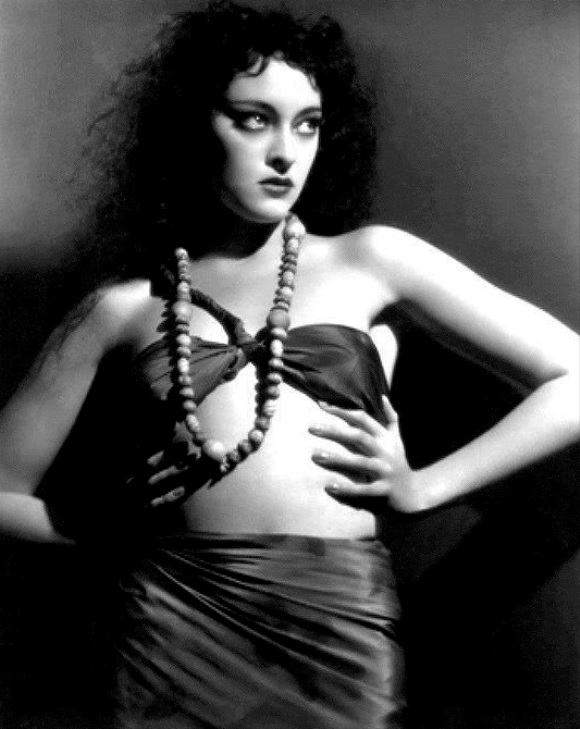
Lota escorts Parker to the guest quarters when they hear screams! Lota explains that the screams emanate from “the House of Pain.” Parker decides to investigate because the movie will die there if he doesn’t. He sees Moreau and Montgomery operating on a human-like creature without anesthetic. Parker is convinced Moreau is committing a barbaric vivisection.
Note#1: Dr. David Ferrier (back when, if you were rich and you called yourself a doctor, ta-da, you were one.) studied the brains of live animals by opening their skulls and probing various areas to see what happened. While he did increase our scientific knowledge of how the brain works, the methodology didn’t sit well with British Society—ultimately leading to the Cruelty to Animals Act of 1876.
Back to the feature presentation… Parker attempts to leave, but encounters savage-looking humanoids resembling beasts emerging from the jungle. Moreau appears from nowhere, cracking his whip, and orders them to recite “the Law.” Bela Lugosi is the sayer of Law, and as the creatures kneel, they intone the words, “Not to spill blood, that is the law. Are we not men?” Another whip crack causes them to scurry away.
To say Edward Parker is freaking out is an understatement, but he is holding it together. He is the hero, after all. Lota, Parker, and Moreau return to the main house. Moreau tries to calm Parker by explaining the nature of his scientific work. Way back when, back in jolly ole’ London, he had developed experiments to accelerate the evolution of plants. Having reached the end of scientific knowledge with plants, he decided that working on animals looked fun. He attempted to transform beasts into humans by combining plastic surgery, blood transfusions, gland extracts, and ray baths. (X-rays were discovered a year before the book’s publication. What rays he uses is never explained.) However, the good Doctor explains that a dog hybrid escaping from his laboratory horrified the locals, and he was encouraged to leave England. (I imagine it was with torches and pitchforks.) Moreau tells Parker that Lota is the sole female on the island, but keeps it to himself that she was crafted from a jungle cat!
Moreau asks, maybe to Parker or himself, “Do you know what it means to feel like God?”
Moreau privately confides to Montgomery that Lota shows human emotions in her obvious attraction to Parker. He is excited to continue observing this process. To ensure that Parker cannot leave, Moreau scuttles the only available boat. He casually blames this mishap on his beast-men. Lota falls in love with Parker and they share an amazingly long and passionate kiss. This is pre-code, but it’s even long for that period. After Lota hugs him, Parker examines her fingernails, which look slightly like claws.
Note #2: The officially named Motion Picture Production Code or The Hays Code were guidelines Hollywood producers had to follow between the early 1930s and the 1970s if they expected their films to be in theaters. By guidelines, I mean laws; rules to make Hollywood pictures presentable or to make them safe for the public at large. Which meant not covering or featuring specific controversial topics, themes, or actions.
Will H. Hays, a Presbyterian elder, became president of the Motion Picture Producers and Distributors of America (MPPDA), which set up the Motion Picture Production Code and its guidelines. Family values, no sex, good guys always win, bad guys always lose, nothing that promotes bad values or perversion (Their words, not mine), and no swearing and saying offensive things.
Hays came to Hollywood because of the public perception that film people and the movies they made were not exactly examples of high art and morality. So many outlandish scandals occurred in Hollywood’s early days that some states were making laws about what could get shown to the public in their states. Hollywood producers worried about the US government getting involved and enforcing legislated censorship. Beyond the disfunction, imagine the bottom line when Congress has to vote on whether a film gets released! Yikes!
Anyway, Parker storms into Moreau’s to confront him for hiding the truth about Lota. Moreau explains Lota is his “most-nearly” human creation, and he wanted to see if she could reproduce with a man. “What!?!” Enraged by the deceit, Parker punches Moreau and demands passage off the island. Moreau observes Lota weeping over the altercation. Moreau is excited (aroused?) by her displaying human emotions, and he proclaims that he will “burn out” the remaining animal in her in the House of Pain!
Meanwhile, the American consul at Apia, Samoa, shot on the other side of Catalina, learns about Parker’s location from the cowed and currently sober freighter captain. Parker’s fiancée Ruth Thomas arrives on the scene. Leila Hyams executes the role to perfection. She was an actress with charm and good looks, yet questionable projects hindered her career. Even though she was a staple of the early talkie period, she’s the female lead in Tod Browning’s Freaks, but she appeared in over fifty films and retired after World War II to enjoy her last 30 years at leisure.
Ruth persuades Captain Donahue to take her to Moreau’s Island, where she reunites with Parker. Moreau convinces them to stay the night. The ape-man, Ouran, one of Moreau’s creations, tries to break into Ruth’s room. He is motivated by an animalistic lust for the lovely and blonde Ruth. Ouran is frightened away by her screams. (He’s a freakin’ ape-man, for crying out loud!) Montgomery confronts Moreau and implies Moreau arranged Ouran’s attempted break-in to see what happened. Moreau doesn’t deny this.
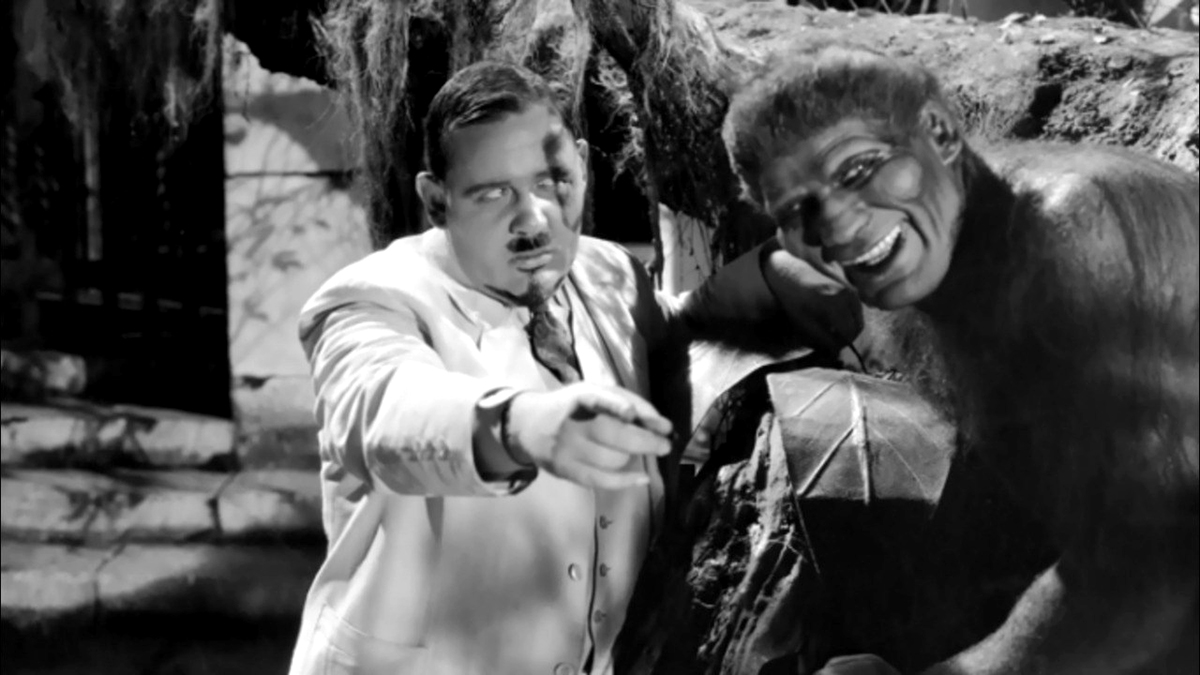
Donahue tries to reach the ship and fetch his crew. Moreau, seeing him depart, dispatches Ouran to strangle him. Learning Moreau has encouraged Ouran to break the “Law”, he beast-men no longer feel bound by the “Law”. They get crazy and set their huts ablaze in defiance of Dr. Moreau. The beast-men drag Moreau into his House of Pain and brutally vivisect him with the Doctor’s surgical knives. Buh-Bye now!
Parker and Ruth escape with help from the disaffected Montgomery. Parker tries to rescue Lota, realizing their love will never be, (Talk about the love that dare not say its name!?!) Lota decides to help them exit by attacking Ouran, who is trying to ambush the group. Unleashing her animal side, the two of them fight to the death. Everyone else makes it to the boat as the island goes up in flames. As the film ends, we feel the fire will destroy Moreau’s work and eradicate the beast-men and his mad science forever.
Now that’s a picture! It is one of the few films I have seen that made me want to shower afterward. It has vivisection, human and non-human monsters, and, technically, bestiality! It’s sex and horror boiled down into one heady brew that sinks in at an emotional level. I say emotional because Island of Lost Souls infers the actual carnality of the proceedings. It alludes to the horror we don’t get to see much. But it’s how the film is shot, how it sounds, how the raven-haired wanton Leda smokes, and how Bela Lugosi needs a shave. It all adds to the way we FEEL watching it.
That feeling is hard to describe, but I place it in the “Ew” category. Oh, it’s “Ew,” all right. It’s an icky experience, but that doesn’t mean I don’t love it. I do. It’s unique—even the dubious whiskers on Moreau’s face are designed to make you… “Ew!” I guess the geniuses were wrong about the direction of the film. About trying to out Mr. Hyde-ing Mr.Hyde, perhaps the character and the actor saved Dr. Jekyll and Mr. Hyde’s film from censorship and the “Ew” factor?
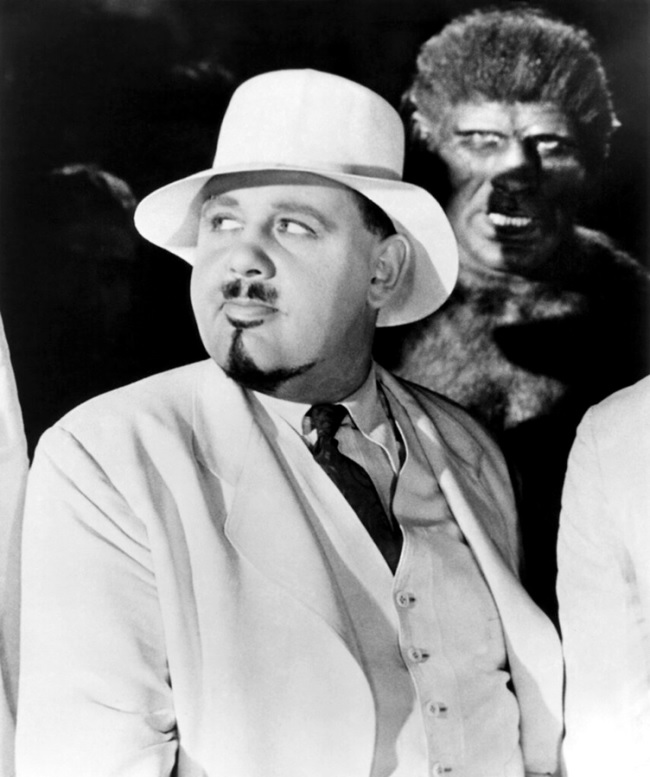
Island of Lost Souls is released. The film was immediately banned in several states. I won’t mention which states, but you can guess. With the bad word spreading fast, international sales could have gone better. Island of Lost Souls was banned in several countries, including Germany, Hungary, India, Italy, Latvia, the Netherlands, and the entire United Kingdom. (The anti-vivisection law is sited.) The film’s ban in the UK was finally lifted by 1958, but even in the 1958 re-release, the censors cut the entirety of Laughton’s death scene. Australia was afraid of the same ending, those beast men burning the place down, that they allowed it to be released, but not for people of aboriginal origin! Imagine that? The Australian Film Board felt that the ending might inspire the indigenous people of that continent to burn it down. Haven’t they ever seen an American western of a similar vintage?
In 1935, Paramount wanted to reissue the film so they could maybe make a few bucks of their investment back, which got denied for re-release. They rolled the dice again in 1941 and received this comeback from the Hays office, “The blasphemous suggestion of the character, played by Charles Laughton, wherein he presumes to create human beings out of animals; the obnoxious suggestion of the attempt of these animals to mate with human beings, and the … excessive gruesomeness and horror … all these tend to make the picture quite definitely repulsive and not suitable for screen entertainment before mixed audiences!”
Definitely a no… but it’s a horror movie and a good one. I could understand their rejections on those grounds if we were discussing a rom-com. It’s a horror film. It sounds like the problem is all Charles Laughton’s fault.
On a positive note, the four finalists, Lona Andre, Gail Patrick, Kathleen Burke, and Verna Hillie, all had decent careers. Lona Andre was a scratch golfer and set a world golfing record for women by shooting 156 holes of golf in under 12 Hours. Gail Patrick is great in My Man Godfrey and developed and produced television shows. Her significant contribution was “Perry Mason”. Verna Hillie’s career involved many credited and uncredited parts in movies and television. She did not have the best career, but became the American agent for the “Queen of Romance” novels, Barbara Cartland, and discoverer of the model/spokesman, Fabio. She made out all right in the end. Kathleen Burke worked as a model and actress, appearing in over twenty films and being Gary Cooper’s love interest in Lives of a Bengal Lancer, but she always felt that she got typecast because of the Panther Girl.
If that wasn’t good enough, the Ape-Men, or ani-men (or what ever they are called) featured a couple of actors and a couple of professional wrestler’s that would go on to fame: Buster Crabbe and Alan Ladd appeared as Ape Men, as did the two wrestlers, Hans Steinke, “The German Oak”, and Harry Ekizian who fought as the “Great Ali Baba”. He’s the guy fighting Tor Johnson in the W.C. Fields masterwork, The Man On The Flying Trapeze! Not only that! Hot on the heels of his performance in Freaks is Schlitzie Surtees, the original pin head.
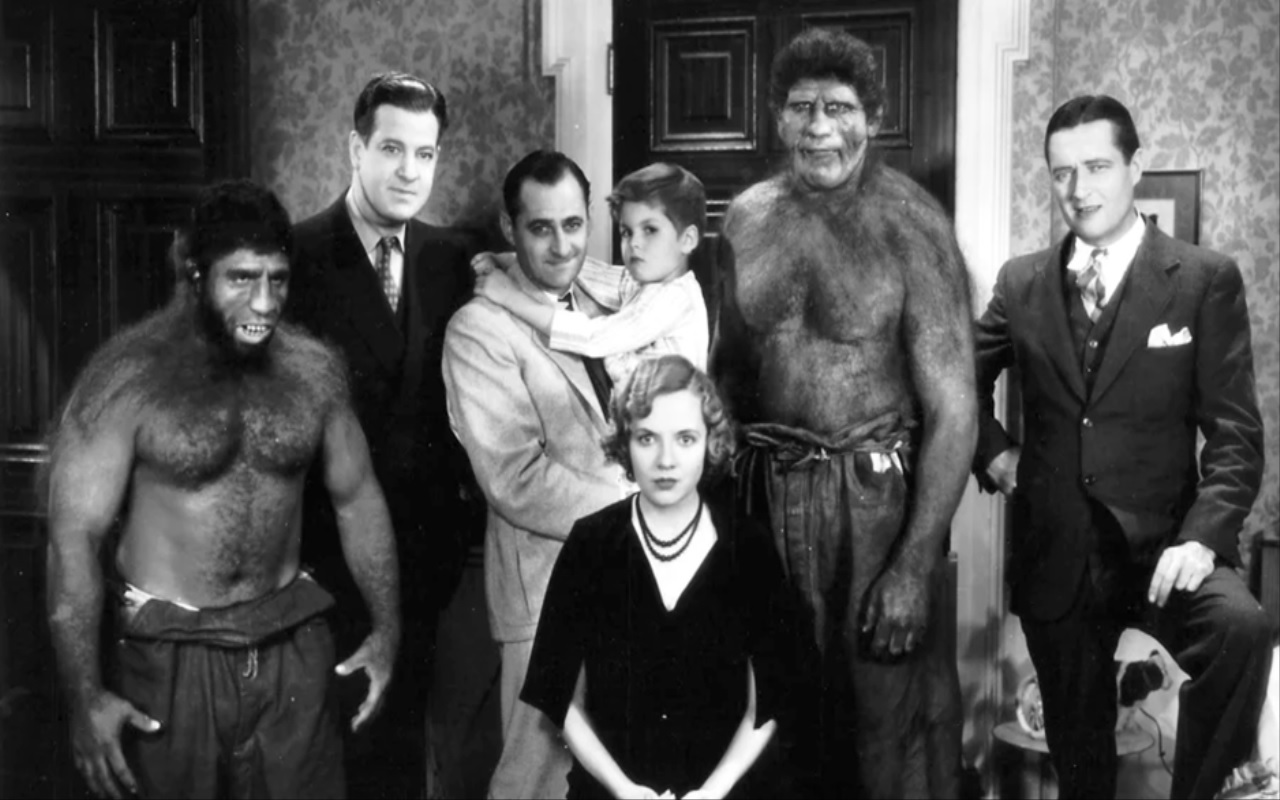
I must have seen Island of the Lost Souls for the first time as a cutdown of the film on television when I was a kid, but I can’t find a record of it being on Chiller Theater or one of the other weekly programs that aired my favorite horror films. These were those days when Famous Monsters of Filmland was far more important to me than Time magazine. That must have been a long time ago. I’m talking about print media! Doh! There were plenty of photographs of the Ani-men and panther girl, Dr. Moreau, and his questionable personal grooming choices. And, of course, there is Bela Lugosi.
Bela Lugosi was Hungary’s most excellent Shakespearean actor. Any appearance by Lugosi in a movie is worthwhile. He was an illegal immigrant (He managed to re-enter the country legally a few years later) who wowed America on stage as “Count Dracula” in the play Dracula. (Weird, right?) He was kind and generous, a little too generous. He loaned much of his Dracula money to family members and declared bankruptcy in 1932. Island of Lost Souls came at the right time. It would be a sign of things to come that he would always be chasing the money. He took almost any job he was offered and worked continuously in theater, where his name could fill seats.

Lugosi developed bad sciatica, aggravated by injuries he received in the military and his subsequent bug out of Hungary. (Politics!) First, he was treated with quack pain remedies like vegetable juices, cleanses, and high colonics. Doctors started to treat him with opiates. The growth of his dependence on opioids after World War II led to a decrease in Lugosi’s screen offers. For good parts, anyway. Doctors treated him for thirty years! On top of this, he drank! He also managed to squeeze in five marriages, four divorces, and one kid!
Lugosi was given the chance of a comeback by the unheralded genius Ed Wood, who offered the actor parts in Glen or Glenda and Bride of the Monster. (Who is going to herald him, if not me?) Grateful for the chance to turn his life around, Lugosi checked himself into rehab. Lugosi survived “cold turkey” and spent three months getting straight. Remarkably, he had a press conference after his release and told the press of his issues with drugs and that he “Felt like a million dollars!” Sadly, in less than a year, “What dreams may come, when we have shuffled off this mortal coil.” He got buried in his Dracula cape!
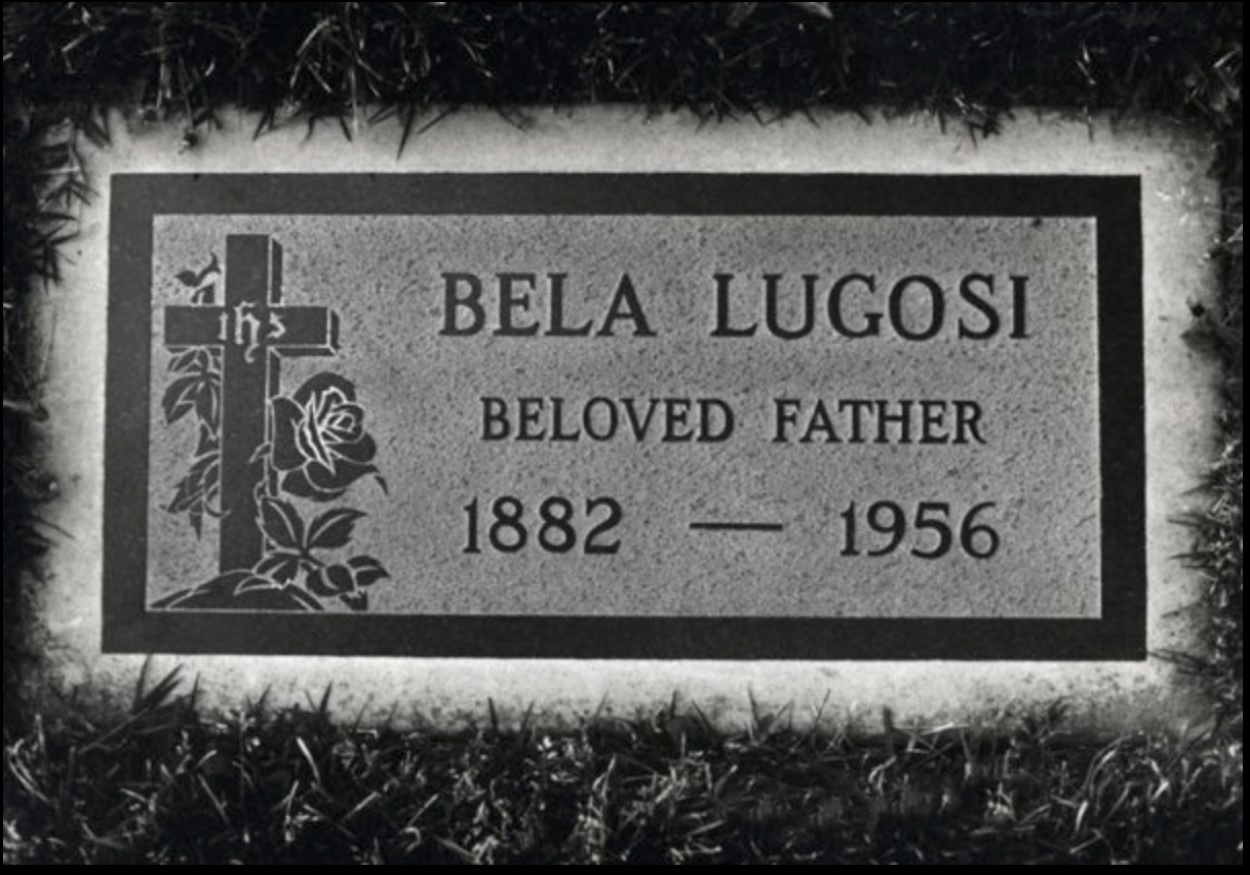
Bela Lugosi, Jr. has done what he can to keep his father’s legend alive for new generations. He has appeared at conventions and given many interviews. He has also started a wine label with two offerings, the Bela Lugosi White Zombie Chardonnay and the Bela Lugosi Malbec. The wines honor Bela’s pleasure for a fine vintage and a tribute to a much-missed parent. On another sad note, I mention that Junior had four kids, and between them, they have seven kids, none of whom know their grandfather or great-grandfather except from his appearances on the silver screen.
 Horror And Sons