
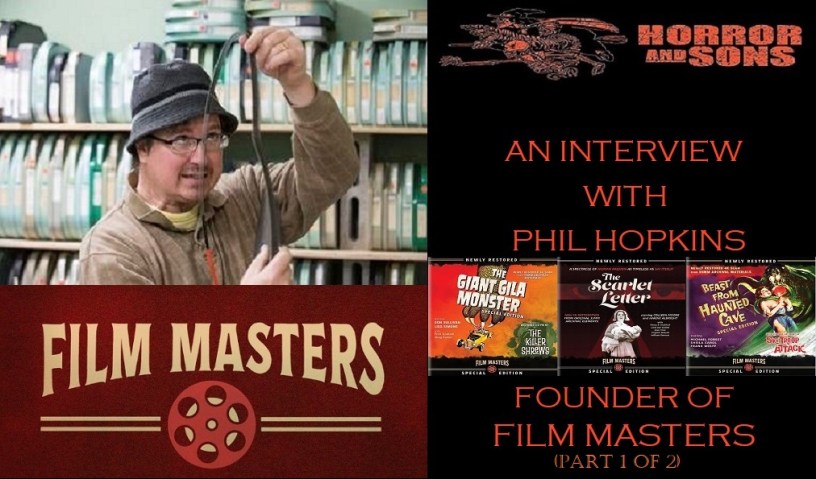
Fans of classic films, and classic genre films in particular, may have recently seen the articles and blurbs announcing the debut of the new film preservation and distribution label, Film Masters. Dedicated to the preservation and restoration of classic film and television of yesteryear, the label marked their entry into the world of home media by announcing a trio of blu-ray releases that are sure to be of interest to many fans of vintage entertainment, and not just fans of horror and sci-fi: A double feature of director Ray Kellogg’s The Giant Gila Monster and The Killer Shrews (both 1959), a double feature of Corman-produced titles with Beast from Haunted Cave (1959) and Ski Troop Attack (1960), and (possibly most surprising) the rarely-seen 1934 adaptation of Nathaniel Hawthorne’s The Scarlet Letter.
I recently had the opportunity to speak with the founder of Film Masters, producer and film archivist Phil Hopkins. Hopkins, who had previously founded The Film Detective and was one of the co-founders of Film Chest, was kind enough to sit down with me and share a mountain’s worth of information on not just Film Masters, but a multitude of other topics. In fact, our conversation lasted so long and touched on so many different facets of filmdom, that I quickly realized that it would be impossible for me to cover it all in just one post. So, this is just the first part of that interview, with the second half posting within the next few days.
It should be mentioned that before the interview began in earnest, Phil and I chatted about the history of Horror And Sons and what led me to even create this site. This led to a brief discussion of fanzines, such as the fanzine that I occasionally contribute to, Drive-In Asylum (yes, that was some self-promotion on my behalf). I mention this as it will be referenced later in the interview.
AN INTERVIEW WITH PHIL HOPKINS, FOUNDER OF FILM MASTERS:
H&S: As a huge fan of Ray Kellogg’s The Giant Gila Monster and The Killer Shrews, I’m ecstatic to see these titles announced as both are among my favorite films. I’m also excited to see Beast from Haunted Cave and Ski Troop Attack. However, as someone who is admittedly more of a genre film fan, this release of The Scarlet Letter is very interesting to me as well. That’s from 1934, correct?
Phil: It is. It was done by what we refer to as a “Poverty Row” studio called Majestic Pictures. Majestic was like a lot of other smaller studios referred to in that characterization of “Poverty Row”. They weren’t really “B-pictures” because you did have legitimate “B-pictures” that were being made by (larger) studios too. You would have a whole different production budget with some of the major studios. Some examples of that would be the Universal Pictures Sherlock Holmes pictures with Basil Rathbone and Nigel Bruce. Those weren’t “A-pictures”, but they did very well. In the terms of sustainability, some of those franchises have continued even to this day and have gone beyond what the studios ever expected. It’s interesting what hits a nerve and what doesn’t. Then, you look at other titles out of “Poverty Row” which were more genre specific.
H&S: Would you consider Monogram Pictures to be one of those studios?
Phil: I would. Personally, I would put them somewhere between “Poverty Row” and a B studio. There are so many smaller studios like Grand National, Tiffany, Majestic… and then you have PRC or Monogram that have a little bit more budget. Not much, but they were very economical in the way they were resourceful and savvy with small budgets. So much of what survives today in terms of what a genre film fan would want to see has always been in a collector’s market environment. The Scarlet Letter is one of those films that… yeah, people know a couple versions, but this is the first sound version, and there’s never been a definite release. There’s always been sort of the lower grade public domain versions of the film, but never had anyone give them a proper release. More than likely, no one ever had access to original camera negatives, fine grains, or 35mm film prints. Back then, people that had 16mm reduction prints or dupe prints were the ones flooding the market, and that’s all that was available. And we were lucky to have those!
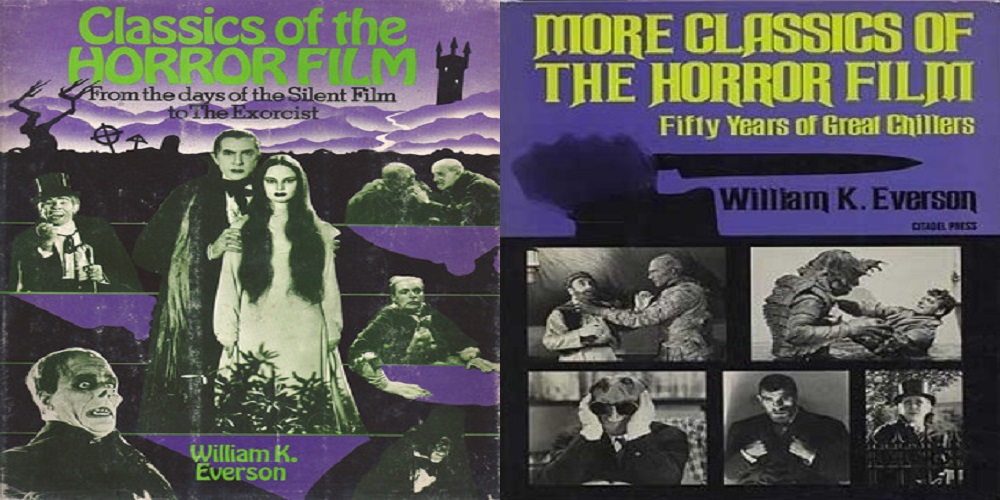
I remember going to a lot of conventions, things like Chiller and whatnot. You were thankful to find a Lugosi Monogram film on VHS just to be able to even see it. I remember having the great reference book, William Everson’s “Classics of the Horror Film”, which I got when I was maybe 7 or 8 years old. As a kid, it was stuff I had never seen, and I was fascinated by all these films that were referenced. A lot of the films were never shown in syndication. They were just sort of unavailable. So, I think what we’ve been seeing recently, say in the last 10 years, is a lot of boutique companies who are fans, like we are, that somehow were able to get access to better materials, and put these films out with commentaries and really good contextual tools to get a fully immersive experience. Because back when we were buying 16mm dupe and reduction prints, we were thankful to have those. We didn’t have anything else.
H&S: It does seem like Film Masters is coming out with a bang! There’s been a really positive response! I’ve been following along on social media and checking out the Film Masters website, and it does seem like the goal of Film Masters is to be more than just another distributor. You have the Film Masters blog (link) and video content available on Youtube. What would you say to film fans about those things and what more can we expect to see?
Phil: Thank you! I appreciate you acknowledging all the excitement we’ve been receiving. This is a continuation of why I started The Film Detective ten years ago. Over the past four years, we’ve started getting very serious about our home video releases, whereas before we were just getting access to these titles. We were doing a lot of work with Turner Classic Movies, doing restoration for mostly broadcast and some of the major streaming platforms. Then, when we started getting into blu-ray, we realized that if we were going to continue our efforts with restoration that our blu-rays had to reflect the work we were doing. Really, this is a continuation of what we were doing previously, but the difference is that today we are looking at this as more of a group of individuals that can be contributors; more of a community in the terms of classic film and the people that really care about preservation in genres that are not usually well promoted within most mainstream channels. Ultimately, we are one of several companies that are doing this. So, I think that what we are trying to do now is support each other, because the more films that get released, restored, preserved, and put out in higher resolution is better for the film in terms of having a better legacy, and it gives a whole new level of appreciation.
You asked about The Scarlet Letter. That’s coming out from a preservation print that came from the original camera negative. You can’t get any better than that! That’s a total win for us to get that level of quality, and we were only able to do that because of the great preservation efforts of UCLA, my friend Sam Sherman, and Janice Allen over at Cinema Arts. It took all those people working together to get this film restored and released as a Blu-ray.
H&S: You mention Sam Sherman. Is he doing a foreword on The Scarlet Letter?
Phil: He’s doing an audio narration about the history of how he came to acquire The Scarlet Letter; the original negative, along with other negatives and material from Majestic Pictures. He’s been incredibly instrumental outside of what he did with his partner, Al Adamson. Sam Sherman has saved and preserved hundreds of films over his career of 60-plus years.
H&S: You have audio history from Sam, but also commentaries from C. Courtney Joyner, Larry Blamire, as well as the fantastic features from Ballyhoo (Motion Pictures). Even with releases from The Film Detective, you had interviews with the surviving stars of these films. You had booklets that came with the releases. So, you provide not just additional information about these films and their production histories, but also why they’re important and worth saving. As a fan of these films and the history of these films, it’s a fantastic thing to have. Do you believe that distributors have an obligation to the fans, and to the films, other than striving to present the best quality image and audio possible?
Phil: I think the films are best represented when the labels include people who care enough to want to put out the best, most in-depth information you can gather. It’s one thing to want to see the film in the highest resolution, but to fully immerse yourself into it, to understand the appreciation of why it’s important or why it’s unique, and then get historical perspective from others who are specialists that can really give a contextual explanation of them within film or pop culture history, it’s far more enjoyable. I think, ultimately, the people who are going to be buying these types of films, they’re geeks like us. They want everything! They want the commentary. They want the booklets. The whole enchilada! We’re not selling to mass merchants. We’re selling to genre fans.
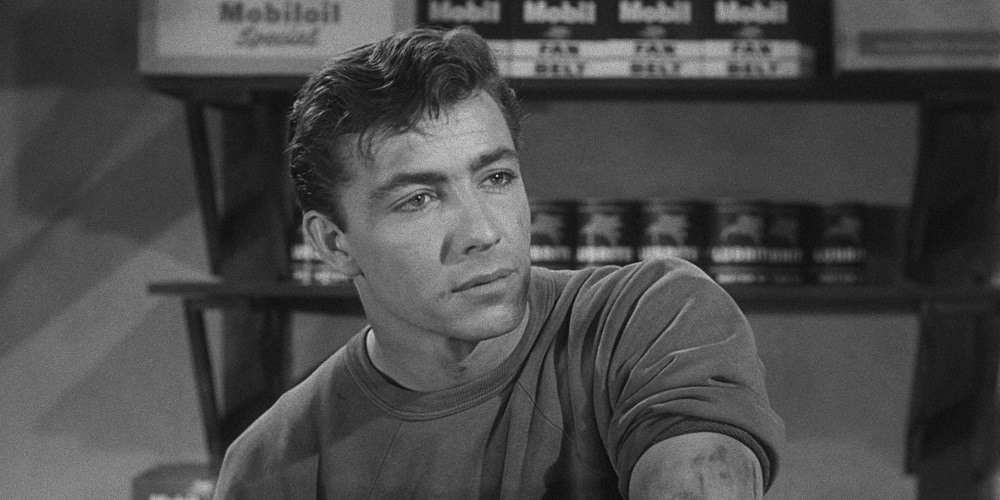
H&S: As a fairly obsessive fan of The Giant Gila Monster, I know that my opportunity to talk to Ray Kellogg or (star of the film) Don Sullivan, that’s gone. So, I feel like this is the closest I’m going to get to that opportunity now. In a sense, I get to feel like I’m living vicariously through these commentators and historians to help fill in the gap.
Phil: Well, that’s right. If you think of that, it’s sort of like you are getting a pep talk on a certain subject that you really care about. That’s why I love going to festivals. We get to talk with people who were involved with the films, talking to scholars or people who were in a position to ask the right questions and extract information that you’d never know otherwise.
I think the immersive side of what we do is kind of the critical part of it. It’s still physical in a digital age. We do want to use the tools, like you’re doing, with our website. We don’t just want to promote the films we’re putting out on physical media. We want to promote all the great people who are contributing to it, because they’re all great writers. I think a large portion of our audience, your audience, are still readers, which is great. So, having an editorial blog that gets updated with new postings every week allows us to stay a part of the community and also give back something we hope will be of interest. In addition to that, we’re also using Youtube to promote not just what we’re doing with our releases and titles we’re restoring, but also to talk about other companies.
H&S: You can correct me if I’m wrong, but I feel that there tends to be more of a focus on genre films, whether it be horror or sci-fi (being released by labels). Do you feel that those films are easier to sell?
Phil: It is. The horror fanbase is much larger than say the silent film fanbase. Every time these companies we’re talking about make the decision to make an investment in releasing, restoring, and promoting a film, whether it’s one of our releases or one of the studios that does similar work, it’s a big risk!
H&S: Financially too!
Phil: Oh, absolutely! That’s why it’s so important that people are willing to take chances and are willing to go off the reservation with other genres. It would be like if you only like heavy metal and didn’t appreciate the blues or classical music. At some point, yeah, you’re a metalhead, but understand that there’s other stuff out there. Like Yngwie Malmsteen; he incorporated classic music into his music, and that made him a more interesting (guitar) player opposed to just some guy playing speed licks.

H&S: I’m glad that you mentioned metal music. When I first started this site, I would get contacted by record labels that released heavy metal music, or by metal bands or metal fans who wanted me to promote a lot of that stuff. First of all, I don’t really listen to a lot of this stuff, so I can’t really relate. At the same time, I also feel like we’re pigeon-holing fans of horror to metal. If I come out here and admit that I listen to a lot of stuff like Yaz or Erasure, I’m not trying to alienate you either.
Phil: I grew up listening to a lot of early heavy metal. Stuff like Black Sabbath. What I liked about it was that their name came from a movie; sort of a tie-in with the band member going to see this film that he was so inspired as to use the name of the film for the name of his band. Because of that, I think that maybe started assimilation, because that was back in 1969. If you look at everything from Iron Maiden to all the imagery that kinda gets grouped into these genre specific groups… like Rob Zombie. He copped the name of his band from the Lugosi film.
You bring up Erasure and Yaz, who are really primary sources of synth and experimental New Wave. And maybe that ties in with a Fritz Lang film. Metropolis, or something where the imagery suits that music in a different way. So, I think, contemporary music… there’s always something cinematic in it.
H&S: Going back to something you said about boutique labels… It does seem that there has been a boom in the rise and popularity of boutique labels, such as Severin or Vinegar Syndrome, but also smaller labels that are releasing titles that you normally wouldn’t see from the larger, more major film distributors. What would you consider to be the biggest catalyst for this boom, and how would you compare it to the rise of labels such as Anchor Bay or Blue Underground during the DVD era, or even Something Weird during the VHS era?
Phil: It’s good news for all of us having more companies taking the initiative to get involved with it. It’s just like what we talked about at the top of the conversation. You have your mainstream publications. Then, you have fanzines. You have original publications. I think it’s the same with record labels too. You’ve got Warner Bros. Then, you’ve got Sub Pop or Metal Blade, who became indies. Then, some of those indies got acquired by the majors because they got so big. You started to see growth and consolidation. Unfortunately, you get corporate America involved with it and that becomes the death knell for those companies.
H&S: Very much so. It’s taking something that was targeted and niche and trying to spread it out to a wider audience. You end up diluting it and losing the focus of what it originally was all about.
Phil: Oh, absolutely! I’ve been part to it my whole life. (My companies have) been acquired or I’ve watched others be acquired. Even what’s been going on with Turner Classic Movies within the last few weeks. They’re a part of a giant organization. That whole giant behemoth media company. TCM is really the only place where you can watch classic movies uninterrupted and commercial-free; genre movies and B-films. They’re a major network, and to think that this company laid off all of the people responsible for the curation, the editorial, the care that goes with it… they were shamed in a very public environment. Thankfully, they brought back the head of programming, so we have a fighting chance of being able to supply movies to them. If you lose people to corporate America, then the whole mission changes.
H&S: That leads into my next question. What are your thoughts on what that means for fans of classic film? Where do we turn now? The layoffs were a really big blow to fans.
Phil: It was devastating! The fact that they laid off Millie De Cherico, the programming director for “TCM Underground”, was so short-sided. What they don’t understand is their audience, and it’s sad when you have a corporation made up of directors and boards of directors who are paid the salary of the entire TCM team. They make the decision to remove these individuals that bring such a passionate environment to these films. It says that they just don’t get their audience whatsoever and the product and the brand will suffer, unfortunately.
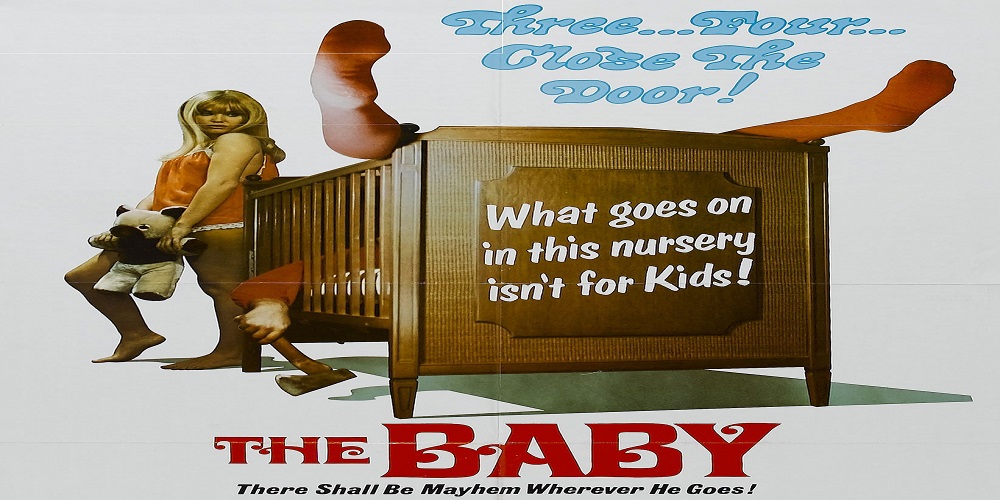
H&S: I very much agree. Speaking for myself, I used to watch (TCM’s) “Underground” as often as I could. I know that it introduced me to films I had never seen before, such as (1973’s) The Baby. I know plenty of people, and not just other writers, reviewers, and other more vocal film fans, but also more casual fans who discovered so many great films from watching “Underground”.
Phil: Not just that, but it also bridged the gap because the people who were watching Underground were made up of more of a younger demographic. Effectively, what they did by getting rid of Millie and her programming was to say, “we don’t care about a younger audience and helping to grow the network.” It’s so short sided just from a logic standpoint. It makes no sense. Then, you say, “Well, who’s running this whole shebang?” Ultimately, when you’re part of a corporation, you can’t make the same decisions that we can at an indie boutique label. We’re relying on the fans and the supporters to purchase enough to put the next one out.
H&S: This may be unrelated, but there has been a rise in streaming platforms over the past decade or so. It’s great that these films are there to watch, if they are even available at all, but they’re just kind of thrown out there. It’s “Okay, click it! Watch it!” There’s no history, no context. There’s nothing that tells you why this film is important. Do you see this rise in streaming as a boon or bane for classic cinema?
Phil: If you look at what happened several years ago when the same company effectively tried to get rid of everyone for the entire division of TCM… what they did with FilmStruck, which could have been all the things we’re talking about that are lacking. FilmStruck had such a great team of people that were partnered with Criterion and with Turner. You put them together, that’s one hell of a good start for building a streaming service! And they shut it down. To me it says that corporate media executives could give two shits about preserving film and two shits about classic movie promotion and celebration. It just means lowest common denominator. Go after data. That rules everything. That’s why there’s such a wasteland of streaming channels and streaming platforms.
H&S: Don’t get me wrong. I’ll still watch them because the movies are there, but it’s not the same as with TCM where you have the host to provide you with a little of the histories and backstories of directors, producers, or actors that you might not normally hear about. It’s nice to have that history lesson with each movie. Not only does it make the movie seem more important, but I feel that it pulls you into the movie more. It becomes more than just images on a screen.
Phil: Absolutely! When you have some sort of contextual explanation, that can either be the catalyst to turn it off or sit down for a couple hours and you really get involved. The randomness of streaming and the discovery is atrocious. I think that at some point next year we’ll probably partner with other major studios and several of our kindred friends who own boutique labels and try to put together something that reflects what we all like on blu-ray in a digital environment. We’ll need to build that. It doesn’t exist right now, but I do think that collectively that our audience needs to migrate and support a platform that’s like a genre-film TCM, but a digital version that can be the alternative. Because, at some point, I don’t think that we can rely on TCM being around for that much longer based on what’s happened over the few weeks.
Learn more about Film Masters and their releases at https://www.filmmasters.com
 Horror And Sons
What a great, substantive interview! As you both point out, curation, context and history are sorely lacking in the current streaming environment. TCM has gotten a temporary partial reprieve, but I’m worried that with a prolonged strike and the seeming inability of the media giants to make reasonably budgeted films and TV that people actually want to watch, TCM will ultimately be sacrificed to balance the books. Still, Phil points the way to smaller entities uniting to create boutique, genre streaming destinations that do right by discerning fans. Looking forward to part 2!
LikeLiked by 1 person
As always, it’s great to hear your feedback, especially since I know that you are passionate about the older films as well. I will admit that I did not consider the consequences of the strike. In a perfect world, film viewers would lean into watching older films while they await new releases, but I do also accept that as “wishful thinking”. I would also hope that the recent failings and underachievement of recent big budget CG-fests (quite a few of which seem to be Disney-owned) would make these studios shift focus to lower-budgeted story driven films, but again, probably just “wishful thinking”.
LikeLiked by 1 person